

Views: 0 Author: Site Editor Publish Time: 2026-06-18 Origin: Site


High-end outdoor living spaces have transitioned from simple built-in grills to fully functional culinary and entertainment centers. Homeowners now expect their exterior spaces to mirror interior luxury. They demand seamless flow, high-performance cooking gear, and sophisticated layouts. Historically, homeowners relied on masonry, wood, or bare stainless steel for these builds. Sadly, these legacy materials often face degradation from harsh weather, drastic climate shifts, or heavy daily use. They warp, crack, rust, and eventually fail.
As the market matures, buyers are shifting toward resilient materials engineered for longevity and low maintenance. Specifically, powder-coated aluminum is leading this shift. This guide breaks down the performance realities, lifecycle benefits, and architectural advantages of aluminum cabinetry. It helps you determine if it aligns perfectly with your outdoor design project.
Superior Climate Resistance: Aluminum’s natural resistance to rust and corrosion makes it highly viable for coastal, high-humidity, and freeze-thaw environments.
Structural Efficiency: Its high strength-to-weight ratio allows for installations on elevated decks and rooftops without the heavy structural reinforcement required by masonry.
Lower Lifetime Cost: While presenting a higher upfront premium, aluminum drastically reduces the repair and replacement cycles associated with wood rot or masonry cracking.
Design Versatility: Modern powder-coating techniques allow aluminum to mimic luxury finishes (including wood grain) without the associated upkeep.
Backyard design has evolved far beyond a fleeting design trend. Weather-tight, luxury exterior spaces serve as functional necessities for modern homeowners. You need a reliable, fully equipped cooking zone. You want a space ready for entertaining year-round. This demand requires rethinking how we construct Outdoor Kitchens from the ground up.
Older construction methods struggle to meet modern performance standards. Traditional materials fail under constant elemental exposure. We can observe these failures across several common options:
Wood and Polymer: Timber framing looks beautiful initially. However, it remains highly vulnerable to warping, moisture rot, and insect damage. Synthetic polymers often suffer from severe UV degradation. They fade and become brittle over time.
Stone and Masonry: Concrete blocks and stone veneers look sturdy. Yet, they remain susceptible to cracking during harsh freeze-thaw cycles. Moisture enters tiny crevices. It freezes, expands, and fractures the mortar. Furthermore, masonry builds are extremely heavy. They are entirely inflexible once installed.
Smart backyard investments require evaluating the complete lifespan of the installation. We must frame the upfront investment against the actual longevity of the kitchen. Traditional materials require seasonal sealing, painting, or masonry patching. These continuous maintenance tasks consume time and money.
In contrast, aluminum offers a highly predictable depreciation curve. It completely avoids the repair cycles inherent to wood or stone. You secure long-term property value. The structure retains its aesthetic appeal and functional integrity for decades. This durability makes the initial capital investment highly worthwhile.
Many buyers operate under a pervasive misconception. They assume bare stainless steel represents the ultimate, fail-proof outdoor material. We must evaluate this assumption objectively. Real-world performance tells a different story.
Stainless steel resists rust better than basic iron. However, it remains far from invincible. Lower-grade stainless alloys, like 304, can rust or pit over time. This degradation accelerates in demanding environments. Coastal salt air attacks bare steel aggressively. Poolside chlorine vapors cause rapid surface pitting. Conversely, aluminum naturally forms a protective oxide layer. It does not rust. When you apply a marine-grade powder coat, it becomes practically impervious to environmental corrosion.
Bare stainless steel behaves as a massive heat sink. Cabinet doors absorb direct sunlight. They become dangerously hot to the touch during summer afternoons. Additionally, bare metal constantly highlights fingerprints, water spots, and grease smudges. You must wipe it down daily.
Powder-coated aluminum solves these daily frustrations. The coated surface reflects heat efficiently. It remains significantly cooler to the touch. The textured finish completely hides fingerprints. You spend less time polishing and more time enjoying your space.
Bare stainless steel forces a specific visual style. It creates a sterile, commercial-kitchen aesthetic. This industrial look rarely matches residential architecture. Modern exterior design demands harmony.
Aluminum allows for limitless customized color matching. You can blend the cabinetry seamlessly into the home’s exterior architecture. You can select vibrant colors, muted earth tones, or realistic wood grain textures. This aesthetic flexibility makes aluminum superior for custom luxury designs.
Performance Feature | Bare Stainless Steel (304 Grade) | Powder-Coated Aluminum |
|---|---|---|
Corrosion Resistance | Vulnerable to salt and chlorine pitting. | Immune to rust; highly resistant to salt. |
Heat Retention | High (absorbs sunlight, gets hot). | Low (reflects heat, remains cooler). |
Daily Maintenance | High (shows fingerprints and water spots). | Low (textured finish hides smudges). |
Aesthetic Options | Limited to industrial silver finish. | Unlimited colors and textured patterns. |
Structural Weight | Heavy; requires substantial support. | Lightweight; ideal for elevated decks. |
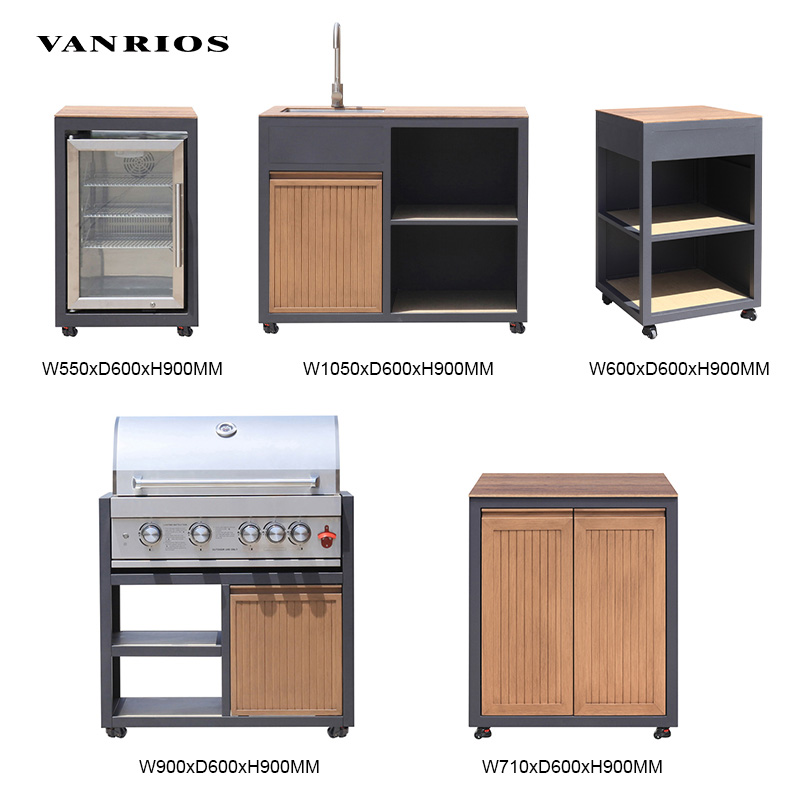
Achieving true longevity requires more than just choosing a strong base metal. The finishing process dictates how well the cabinets survive extreme climates. Understanding this science helps you make informed purchasing decisions.
Premium manufacturers do not use traditional wet paint. They utilize advanced powder coating techniques. Workers spray dry, electrostatically charged pigment particles onto the raw aluminum. They then bake the cabinets in high-temperature curing ovens. This heat melts the powder into a uniform, bonded seal.
Marine-grade powder coating adheres to aluminum on a molecular level. It creates an armor-like shell. This bonded shell completely prevents blistering, flaking, and peeling. It blocks heavy UV exposure perfectly. Vibrant colors will not fade after years of direct sunlight.
Engineers have long recognized aluminum as the absolute standard for marine applications. Boat hulls and dock structures rely on its unique properties. This exact marine durability translates directly to saltwater-adjacent backyards.
Salt spray destroys traditional materials rapidly. It infiltrates masonry and devours bare steel. However, it cannot penetrate properly powder-coated aluminum. Homeowners living near oceans or bays must prioritize these protective properties. Aluminum Outdoor Kitchens provide the only reliable defense against coastal degradation.
Northern climates introduce brutal freezing conditions. Homeowners must protect interior plumbing and gas lines. Aluminum cabinetry serves as a structural shield. The rigid metal box protects vital infrastructure from snow accumulation and ice dams.
More importantly, the metal itself tolerates freezing temperatures effortlessly. Concrete and stone absorb ambient moisture. When temperatures drop below freezing, this trapped water expands. The masonry cracks violently. Aluminum absorbs zero moisture. It will never warp, expand, or fracture during deep winter freezes.
Material science only covers half the equation. We must also examine how the material impacts the actual construction process. Aluminum provides massive logistical advantages. It simplifies architectural planning significantly.
Architects frequently battle the "dead load" problem. Traditional masonry kitchens weigh thousands of pounds. This extreme weight severely limits placement options. You cannot place a cinderblock island on a standard wooden deck. It will collapse.
Aluminum solves this dead load dilemma entirely. Its lightweight nature is crucial for ambitious architectural plans. You can safely design rooftop terraces. You can install full kitchens on cantilevered balconies. You can upgrade raised wooden decks. The high strength-to-weight ratio removes heavy structural reinforcement requirements.
Homeowners despise lengthy construction projects. Traditional masonry builds disrupt your backyard for many weeks. Workers must mix mortar, cut stone, and wait for materials to cure. The site becomes a messy, noisy construction zone.
Aluminum systems offer incredible site agility. Manufacturers build these units off-site in precision factories. They ship the finished cabinets fully assembled or modularly prepared. Installers simply bolt the units together on your patio. This modular approach cuts backyard disruption from weeks to mere days. You reclaim your living space quickly.
Luxury setups demand heavy, specialized appliances. You might want a massive kamado grill, a built-in pizza oven, or a multi-tap kegerator. These items require robust structural support.
Precision-cut aluminum handles this challenge flawlessly. Engineers design specialized support grids inside the base cabinets. These reinforced chassis safely accommodate hundreds of pounds of cooking gear. They ensure perfect ventilation and secure mounting. You never have to worry about a heavy grill crushing its base.
Not all metal cabinetry delivers the same quality. The market contains both premium engineered systems and cheap imitations. You must evaluate specific technical criteria before purchasing. Use the following steps to evaluate potential brands.
Material Gauge and Quality: Thickness matters immensely. Manufacturers measure metal thickness using a gauge system. Lower gauge numbers mean thicker metal. You should look for heavy-gauge aluminum extrusions and thick sheet panels. Thick walls indicate a premium, non-denting build. Avoid brands using thin, hollow, foil-like sheets. They will dent upon minor impact.
Finish Specifications: Never assume all powder coats perform equally. Advise your contractor to verify the finishing standards. The manufacturer must use architectural-grade or marine-grade powder coating. Check for AAMA 2604 or AAMA 2605 compliance. These strict industry certifications guarantee long-term UV resistance and color retention.
Hardware and Weather Sealing: A cabinet is only as strong as its weakest link. Inspect the internal moving parts. Buyers must check for marine-grade stainless steel hinges. Look for soft-close mechanisms. Ensure the heavy-duty drawer glides can support heavy cast-iron pots. Finally, verify the presence of rain-tight rubber gaskets. These seals keep your dry goods truly dry during thunderstorms.
Warranty Exclusions: You must read the fine print carefully. Shady brands offer lifetime warranties on the metal, but exclude the paint. Look for comprehensive warranties. The policy must cover the structural integrity of the metal cabinet. It must also explicitly protect the powder-coated finish against premature peeling or blistering.
Designing a luxury exterior space requires careful material selection. We have analyzed the stark performance differences between legacy materials, bare stainless steel, and modern metal alternatives. While premium aluminum requires a strong initial capital investment, the overall lifecycle benefits prove undeniable.
Its lifecycle costs, aesthetic flexibility, and profound structural advantages make it a superior choice. You avoid the endless patching of masonry. You eliminate the constant polishing required by bare steel. You gain a versatile, weather-proof cooking environment.
Take proactive next steps today. Request physical material samples from top manufacturers. Review their warranty documents closely to verify finish protections. Finally, schedule a site assessment with a certified installer. They can check your deck load capacities and map out the best layout options for your new space.
A: Premium cabinets do not dent easily. Quality depends entirely on gauge thickness and structural reinforcement. Cheap, hollow metal options will dent upon impact. However, luxury brands utilize heavy-gauge, extruded aluminum reinforced with rigid interior framing. This thick construction resists dents from dropped tools or severe weather perfectly.
A: Material costs for premium metal often appear higher upfront. However, custom stone requires intense manual labor. Masonry labor costs usually bridge the initial price gap. Furthermore, when you compare long-term maintenance costs, metal wins. It eliminates the expensive repair and sealing cycles associated with custom stone installations.
A: Maintenance is incredibly simple. You only need a soft cloth, mild dish soap, and warm water. Wipe down the surfaces to remove pollen or cooking grease. You must avoid harsh chemical solvents and abrasive scrubbing pads. These abrasive items can scratch the protective clear coat finish.
A: Yes, it is completely safe. Manufacturers engineer these systems specifically for outdoor cooking. The metal possesses a very high melting point. Additionally, installers utilize double-walled, insulated grill jackets. These specialized steel liners prevent the grill's intense heat from transferring to the surrounding powder-coated cabinets.


