

Views: 0 Author: Site Editor Publish Time: 2026-09-21 Origin: Site


Expanding a restaurant's footprint with a dedicated BBQ concept requires specialized infrastructure, not just consumer-grade equipment placed on a patio. Procuring a modular BBQ pod accelerates the deployment of a commercial setup, but selecting an unverified supplier introduces severe risks. These hazards include health department code violations, fire safety failures, and operational bottlenecks that cripple service speed during peak hours. To protect capital investment and ensure uninterrupted service, restaurant operators must evaluate BBQ pod suppliers through a strict framework. This evaluation must prioritize material durability, regulatory compliance, and seamless workflow integration. Moving cooking operations outside demands rigorous planning. You will learn exactly how to vet suppliers, avoid critical compliance failures, and build a high-performing Outdoor Kitchen that drives restaurant revenue.
Compliance is Non-Negotiable: Viable suppliers must engineer pods that meet stringent local health codes (NSF standards) and fire safety regulations (NFPA 96 for ventilation).
Material Integrity Dictates Lifespan: Commercial environments require heavy-gauge, marine-grade (316) or 304 stainless steel to withstand high-volume usage, grease, and weather exposure.
Modularity Equals Scalability: The best suppliers offer modular configurations that allow restaurants to adapt their commercial bbq station as menu demands, smoker preferences, and volume increase.
You must establish operational and regulatory benchmarks before evaluating specific suppliers. A BBQ pod must function as a high-efficiency engine for your restaurant. If the foundational design ignores throughput requirements or local fire codes, the project will fail before the first service. Operators must define exact success metrics based on menu demands and site constraints. We see too many operators buy a shiny box only to realize it cannot handle a Friday night rush.
Pod capacity and equipment selection dictate the entire layout. Slow-smoked brisket yields require massive, stable holding environments and large-capacity offset or gravity-fed smokers. You might need to hold 500 pounds of meat at a precise 145 degrees Fahrenheit for hours. Conversely, high-turnover grilled items like burgers or skewers demand expansive flat tops or open-fire grills with rapid recovery times. Suppliers must provide configurations that match your specific cooking methods. A mismatch here leads to stalled ticket times and compromised food quality.
You must map the transition from raw prep to the smoker, holding, and plating. Distinct heat zones cannot interfere with cold prep stations. Raw poultry or pork cannot share prep surfaces with finished, rested meats. The physical layout of the pod must enforce these boundaries naturally. Integrating the pod's footprint with the existing back-of-house operations ensures smooth expediting. Food runners need clear, unobstructed paths from the outdoor staging area to the dining room. We always map out the exact foot traffic patterns before approving a pod design.
Safe, ergonomic workflows for mid-service charcoal or wood refills keep the line moving. Live-fire management requires space. Pitmasters need room to swing open heavy firebox doors, shovel ash, and load heavy logs without disrupting the plating line. Suppliers must design pods with integrated, heat-shielded fuel storage that keeps wood dry and immediately accessible. If your pitmaster has to walk fifty feet to grab a log during a rush, your ticket times will suffer.
NSF-certified surfaces and equipment separate commercial infrastructure from residential backyard setups. Health inspectors will immediately red-tag uncertified prep tables, sinks, or refrigeration units. Every weld must be smooth, and every surface must be non-porous and easily cleanable to prevent bacterial growth. You must demand proof of certification from your supplier before signing any purchase orders. Do not assume a stainless steel table meets code just because it looks shiny.
Fire suppression requirements dictate the complexity of outdoor expansion. Many municipalities require Type 1 commercial hoods and integrated fire suppression systems for enclosed or semi-enclosed pods. Clearance to combustibles is strictly enforced. If your pod sits near a wooden pergola, an awning, or the main restaurant building, the supplier must engineer specific thermal breaks and heat shields to comply with local fire marshal mandates. We have seen entire patios shut down because a smoker was placed six inches too close to a combustible wall.
Strict code compliance for combustible fuel storage and safe ash disposal prevents catastrophic accidents. Ash remains hot for days. The pod must feature dedicated, fire-rated metal bins for ash disposal, completely isolated from fresh fuel and grease traps. Furthermore, plumbing and utility requirements for handwashing and wastewater disposal are mandatory. A fully compliant commercial outdoor kitchen requires dedicated hot water lines for hand sinks and proper grease interceptor connections for three-compartment sinks.
Once baseline criteria are established, operators must scrutinize how suppliers manufacture their units. The difference between a unit that lasts ten years and one that fails in ten months lies entirely in fabrication standards, material choices, and engineering tolerances. Demand technical specifications and review them with your general contractor.
The choice between consumer-grade 430 stainless steel and commercial-grade 304 or 316 stainless steel dictates the lifespan of your investment. Type 430 stainless contains less nickel and is highly susceptible to rust and pitting, especially when exposed to acidic BBQ sauces, heavy salt rubs, and outdoor moisture. Commercial-grade 304 stainless steel is the industry standard, offering excellent corrosion resistance. For coastal properties exposed to salt air, marine-grade 316 stainless steel is the only viable option. Suppliers pushing 430 stainless are cutting corners to lower their manufacturing costs.
Structural integrity of the pod chassis is non-negotiable. Commercial-grade smokers weigh thousands of pounds. The chassis must utilize welded tubular steel frames to support this dynamic load. Bolted sheet metal frames will warp, rack, and eventually collapse under the stress of heavy equipment and constant thermal expansion. Inspect the chassis design to ensure it can handle the rigors of a high-volume restaurant environment. We always ask for cross-section drawings of the frame before approving a build.
Proper thermal management and insulation protect adjacent cold-storage units from high-heat smokers and grills. A 700-degree firebox sitting inches away from a commercial refrigerator will destroy the compressor if not properly insulated. Top-tier suppliers utilize double-walled construction with ceramic fiber insulation to create absolute thermal breaks. This ensures refrigeration units maintain safe holding temperatures regardless of the ambient heat generated by the smokers.
Material Grade | Corrosion Resistance | Best Application Environment | Expected Lifespan in Commercial Use |
|---|---|---|---|
430 Stainless Steel | Low (Prone to rust and pitting) | Indoor, dry environments only | 1 to 3 years |
304 Stainless Steel | High (Resists food acids and water) | Standard outdoor restaurant patios | 10+ years |
316 Stainless Steel | Maximum (Marine grade) | Coastal properties, high salt exposure | 15+ years |
Plug-and-play utility connections drastically reduce installation timelines. A well-engineered pod arrives with pre-plumbed gas manifolds, centralized electrical subpanels, and consolidated water lines. This allows your local contractors to make single-point connections, rather than running individual lines to every piece of equipment. This modularity is a hallmark of a professional supplier and saves days of expensive plumbing and electrical labor on site.
The flexibility to swap equipment without structural modifications future-proofs your investment. The BBQ industry evolves. Today you may run offset smokers; tomorrow you might need high-capacity pellet smokers or gravity-fed charcoal units. The pod should feature modular cutouts and reinforced decking that accommodates different footprints. You should not have to cut steel or rebuild the chassis to upgrade your cooking equipment. A static design limits your menu development over the next decade.
Integrated weatherproofing maintains year-round operation. Rain, wind, and snow destroy service efficiency. Look for suppliers that offer engineered canopies, heavy-duty windbreaks, and winterization kits for plumbing lines. A commercial bbq station must generate revenue in all weather conditions, not just on sunny afternoons. We recommend installing heavy-duty roll-down vinyl enclosures to protect the pitmasters during winter months.
Pre-installed, compliant exhaust systems eliminate major regulatory hurdles. If your local code requires a Type 1 hood, retrofitting it onto a finished pod is a nightmare. The supplier must engineer the roof structure to support the weight of the hood, the exhaust fan, and the make-up air unit. They must also provide the necessary mounting points for the fire suppression nozzles and piping. Factory-installed hoods guarantee proper alignment and structural support.
Airflow design for smoke management, operator safety, and optimal draft for solid-fuel smokers requires precise engineering. Solid fuel requires oxygen. If the pod is too enclosed, the fires will choke, producing acrid, bitter smoke that ruins the meat. The supplier must understand the draft dynamics of commercial smokers and design the enclosure to facilitate proper airflow while protecting the firebox from erratic wind gusts. Poor draft design leads to inconsistent temperatures and frustrated pitmasters.
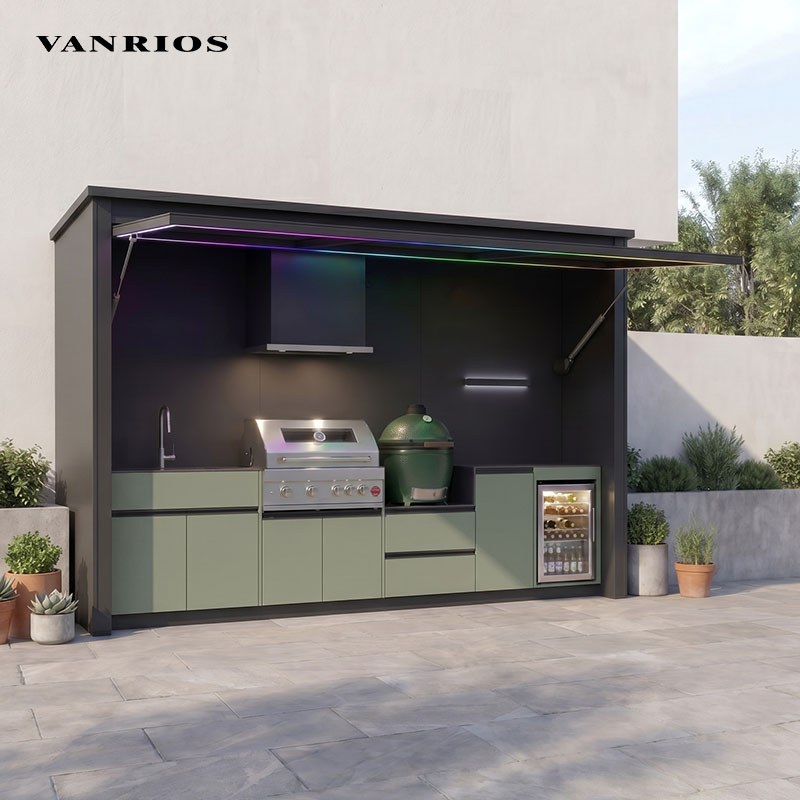
Restaurant operators face a critical decision when expanding their footprint: purchase a pre-fabricated unit or hire contractors for a custom on-site build. Each approach carries distinct operational impacts, deployment timelines, and logistical challenges. Understanding these trade-offs ensures the chosen path aligns with the restaurant's opening schedule and operational capacity.
Pre-fabricated pods offer a massive advantage in deployment speed. On-site construction turns your patio into a loud, dusty construction zone for weeks or months, disrupting current service and alienating guests. Pre-fab units are built in a controlled factory environment. Once site preparation is complete, the actual installation of a pre-fab pod often takes just a few days. This rapid deployment minimizes downtime and accelerates your path to generating revenue. We have dropped pre-fab units onto concrete pads on a Tuesday and had them cooking meat by Thursday.
Cost predictability heavily favors the pre-fabricated route. When sourcing a wholesale outdoor BBQ kitchen, you receive a fixed quote for the unit. Custom on-site builds are notoriously prone to contractor overruns, weather delays, and fluctuating material costs. With a pre-fab pod, the financial risk of construction delays is shifted to the manufacturer, allowing operators to budget with absolute certainty. You know exactly what the unit will cost before it leaves the factory floor.
Custom builds hold an edge regarding design limitations. Pre-fab units are constrained by shipping dimensions. They must fit on flatbed trailers and navigate standard roadways. If your restaurant has a highly irregular patio space, a steep grade, or severe access restrictions, a standard modular pod might require compromises. Custom builds can be tailored to the exact millimeter of your available footprint, though this customization comes at the expense of time and predictability.
Evaluation Metric | Pre-Fabricated BBQ Pods | Custom On-Site Builds |
|---|---|---|
Deployment Speed | Rapid (1-3 days on-site after delivery) | Slow (Weeks to months of active construction) |
Cost Predictability | High (Fixed manufacturing quotes) | Low (Subject to contractor change orders) |
Site Disruption | Minimal (Factory built, delivered whole) | Severe (Noise, dust, and staging areas required) |
Design Flexibility | Moderate (Constrained by shipping dimensions) | Maximum (Tailored to exact site topography) |
Quality Control | High (Standardized factory engineering) | Variable (Dependent on local contractor skill) |
Even with a perfectly engineered pod, the execution phase carries significant risks. Supply chain failures, delivery logistics, and post-installation support can derail an otherwise successful project. Operators must proactively vet suppliers on their operational reliability, not just their metal fabrication skills. A beautiful pod sitting in a factory does you no good if it cannot be delivered on time.
Delayed equipment delivery directly impacts restaurant opening dates and revenue. A delayed pod means delayed revenue, while rent and labor costs continue to accrue. You must establish hard deadlines in your contract. Ask suppliers about their current backlog and their historical on-time delivery rates. Do not accept vague estimates. Demand a specific production schedule with weekly progress updates. We require photographic evidence of the build progress at the 50% and 75% completion marks.
Supplier transparency regarding component sourcing and manufacturing timelines protects your schedule. Ask where they source their stainless steel, their gas valves, and their refrigeration compressors. If they rely heavily on overseas components with volatile shipping routes, your project is at risk. Suppliers who maintain deep domestic inventories or manufacture components in-house offer far greater supply chain reliability. You need to know if a missing gas valve will delay your entire project by three months.
You must scrutinize the fine print of structural warranties versus equipment warranties to prevent future disputes. A supplier might offer a lifetime warranty on the stainless steel chassis but only a 90-day warranty on the integrated gas burners. Furthermore, ensure the warranties explicitly cover commercial use. Many manufacturers void warranties the moment equipment is placed in a high-volume restaurant environment. You need heavy-duty commercial coverage that protects your investment during peak operational hours.
A robust network for authorized service technicians and replacement part availability ensures long-term operation. When a compressor fails on a Friday afternoon before a busy weekend service, you cannot wait two weeks for a proprietary part to ship from across the country. The supplier must have a robust network of local service partners and guarantee rapid shipping for critical replacement components. Ask for a list of authorized repair technicians in your specific zip code before signing the contract.
You must establish a clear chain of accountability if a pre-installed component fails health inspections. If the local health inspector rejects the sink configuration or the fire marshal fails the hood clearance, who pays for the modifications? The contract must explicitly state that the supplier guarantees compliance with the codes provided during the design phase, and they bear the financial responsibility for necessary retrofits if their engineering falls short. Never accept a unit that shifts compliance liability entirely onto the restaurant operator.
Draft a comprehensive Request for Proposal detailing your exact menu volume, footprint constraints, and specific smoker preferences.
Compile a detailed list of all local health, fire, and zoning codes applicable to your specific address to include in the RFP.
Demand a mandatory site assessment from shortlisted suppliers to verify access routes, utility locations, and structural requirements.
Request engineering schematics demonstrating the exact thermal breaks and airflow management systems proposed for your outdoor kitchen.
A: Commercial setups require NSF-certified materials, heavy-gauge 304 or 316 stainless steel, and high-BTU output equipment designed for continuous use. They feature dedicated heat zones, integrated grease management, and strict adherence to commercial health and fire codes, whereas residential units use thinner metals and lack regulatory compliance features.
A: Requirements vary strictly by local municipality. However, enclosed or semi-enclosed pods typically require Type 1 commercial hoods and integrated fire suppression systems, especially when operating solid-fuel smokers that generate heavy grease-laden smoke and high heat.
A: Reputable suppliers design pods with integrated, fire-rated storage bins to keep wood or charcoal dry and accessible. They also engineer dedicated, safe ash disposal systems, utilizing heavy-duty metal receptacles that isolate hot embers from fresh fuel and comply with local fire codes.
A: Yes, reputable commercial suppliers offer modular cutouts and reinforced chassis designs. This engineering allows operators to accommodate various heavy-duty smokers, including large offsets, gravity-fed drum smokers, and expansive flat tops, simultaneously without compromising structural integrity.
A: Standard site preparation requires trenched electrical lines with appropriate subpanels, dedicated gas lines connected to natural gas or bulk propane tanks, a potable water supply for sinks, and sanitary sewer connections equipped with proper grease interceptors.
A: While factory manufacturing lead times vary, the actual on-site installation of a pre-fabricated pod is highly efficient. If all site preparation and utility trenching are finished prior to delivery, the physical installation and final connections can often be completed in 1 to 3 days.


