

Views: 0 Author: Site Editor Publish Time: 2026-08-24 Origin: Site


Investing in premium outdoor furniture always carries high stakes. Harsh UV rays, constant moisture, and unpredictable temperature fluctuations rapidly degrade substandard materials. Transitioning an outdoor space from a basic patio to a resort-grade lounge requires careful planning. You must perfectly balance your aesthetic intent against structural longevity. Many buyers misjudge long-term value because they ignore ongoing maintenance demands. The true value of your investment depends entirely on its lifespan and maintenance hours, not just the initial retail price. This guide explores the best materials for lasting outdoor performance. We will thoroughly evaluate how different frames and fabrics hold up over time. You will learn how to select the ideal piece for your specific local climate.
Material selection dictates both the lifespan and maintenance schedule of any outdoor daybed.
Powder-coated aluminum offers the highest durability-to-maintenance ratio, inherently resisting rust and structural warping.
Teak and high-density polyethylene (HDPE) wicker are viable alternatives but require specific, ongoing upkeep to prevent degradation.
Cushion textiles and foam density are equally critical to the frame material in determining long-term weather resistance.
Evaluating warranties and structural weight capacities separates commercial-grade investments from seasonal, disposable furniture.
Selecting an outdoor furniture piece requires a strict evaluation of your environment. Local weather patterns immediately narrow down your viable material choices. Coastal regions bombard furniture with corrosive salt air. High-humidity zones encourage rampant mold and mildew growth. Northern climates subject frames to brutal freeze-thaw cycles. You must match your chosen material to these specific environmental stressors. Ignoring your climate guarantees premature wear and costly replacements.
We must analyze the failure rate of cheaper materials over a standard five-year period. Untreated steel invariably succumbs to rust when exposed to rain. Natural rattan rots quickly if left outside. Cheap plastic polymers become brittle and shatter under intense summer sun. When you buy budget furniture, you often replace it three times over a decade. Engineered outdoor materials require a higher upfront investment. However, they deliver a significantly lower cost per year of use.
Defining a successful purchase means setting strict performance criteria. A high-quality piece should exhibit zero rust after heavy rain exposure. It must maintain absolute structural stability under heavy loads. UV colorfastness is critical to prevent fading and chalking over time. Finally, the best furniture requires minimal seasonal storage. You should spend your weekends enjoying your furniture, not sanding or sealing it.
Understanding material science helps you make informed purchasing decisions. Each popular frame material presents distinct advantages and specific maintenance burdens. We compare them below to highlight their practical performance.
Table 1: Comparative Material Durability Chart
Material Type | Primary Advantage | Major Vulnerability | Maintenance Level |
|---|---|---|---|
Hardwoods (Teak) | Natural oils repel pests and moisture | Checking (cracking) in dry climates | High (Annual sealing/oiling) |
HDPE Wicker | Traditional woven aesthetic | Relies entirely on internal frame strength | Medium (Regular washing) |
Powder-Coated Aluminum | Impervious to structural rust | Surface scratching if mishandled | Low (Occasional wipe down) |
Many designers prefer the natural aesthetic of premium hardwoods. Teak offers exceptional density and durability. It contains natural oils naturally repelling insects and moisture. This makes it a traditional favorite for luxury patios.
However, teak carries significant risks and maintenance demands. Left untreated, it quickly weathers to a silvery-gray patina. Preserving its original warm hue requires annual sanding and oiling. Dry climates frequently cause teak to undergo "checking," which means the wood develops visible cracks. Additionally, hardwood frames are exceptionally heavy. Repositioning them around your deck requires substantial effort.
High-density polyethylene (HDPE) wicker mimics the classic look of natural rattan. It provides a lightweight, traditional aesthetic. Unlike natural plant fibers, synthetic resins actively resist rot and decay. This makes HDPE a popular choice for transitional design spaces.
Buyers must exercise caution regarding material grades. Cheap PVC-based wickers crack and unspool rapidly under UV exposure. High-quality HDPE performs much better. However, the wicker is merely a decorative shell. The piece requires a robust, rust-proof internal frame to maintain structural integrity. Without a strong skeleton, the wicker quickly sags and breaks.
Engineered metals represent the pinnacle of modern outdoor furniture design. A well-constructed outdoor aluminum daybed delivers an unparalleled durability-to-maintenance ratio. The metal remains completely impervious to rust. It offers immense tensile strength while remaining surprisingly lightweight. This allows for easy modular repositioning during social gatherings.
The primary risk involves the exterior finish. Aluminum requires high-grade powder coating to prevent surface oxidation. Poorly applied finishes can blister or peel in harsh climates. Therefore, verifying the coating quality remains essential during your selection process.
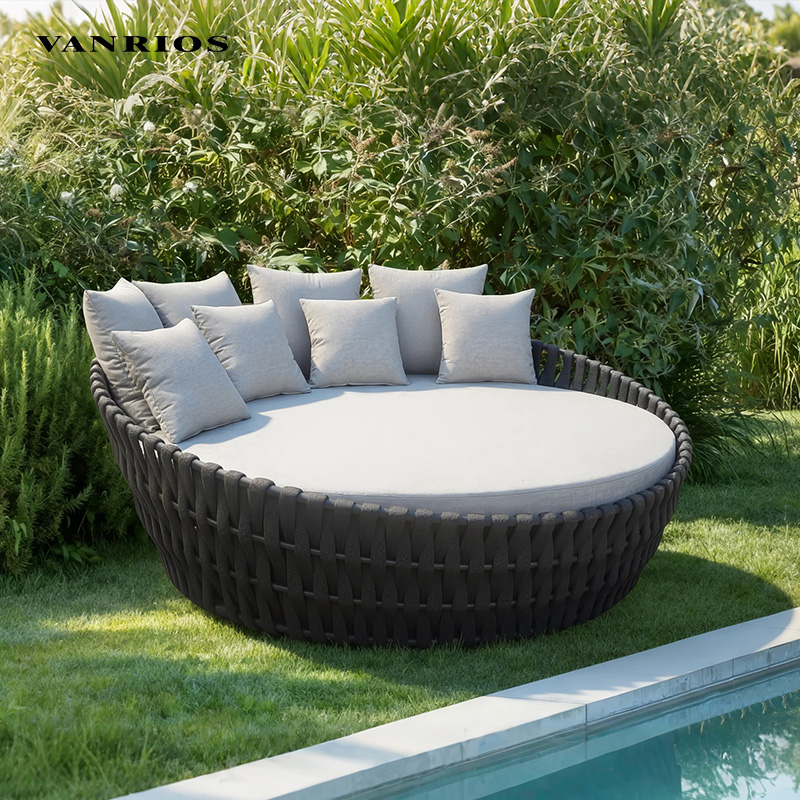
Aluminum dominates the premium outdoor furniture sector for precise scientific reasons. Understanding these mechanisms explains why resorts and luxury hotels heavily rely on this specific material.
Aluminum reacts to environmental exposure differently than steel or iron. When steel gets wet, it forms iron oxide (rust). Rust continuously flakes away, destroying the structural integrity of the metal. Conversely, aluminum forms a microscopic layer of aluminum oxide when exposed to oxygen. This hard, transparent layer actively passivates the metal underneath. It stops further corrosion instantly. This chemical reality makes an Aluminum Daybed fundamentally superior for wet, humid, or coastal environments.
Not all metal finishes offer the same protection. You must differentiate between cheap liquid spray paint and true electrostatic powder coating. Manufacturers apply dry powder to the aluminum frame. They then bake the frame in high-temperature ovens. This process melts the powder into a continuous, tough polymer skin. High-quality powder coats easily resist chipping, scratching, and intense UV fading. Industry standards, such as those set by AAMA, dictate the required thickness and durability of these coatings. Always verify the manufacturer uses a multi-step pre-treatment process.
Many consumers worry metal furniture will burn them in direct summer sunlight. This fear stems from outdated experiences with wrought iron or steel. Modern powder-coated finishes effectively mitigate heat absorption. Aluminum naturally dissipates heat much faster than dense iron. Furthermore, selecting lighter color palettes drastically reduces surface temperatures. A white or light-gray frame will remain comfortable to the touch, even during peak afternoon sun.
Design flexibility sets aluminum apart from traditional wood. Extruded aluminum allows manufacturers to create sleek, minimalist profiles. It supports complex curves and sharp geometric angles. This versatility enables designs mimicking high-end hotel aesthetics perfectly. Aluminum frames easily integrate into modular sets. You can reconfigure your lounge area effortlessly. The metal supports heavy loads without requiring bulky, visually intrusive support beams.
Consumers often obsess over frame materials while neglecting the cushions. This is a crucial mistake. Cushion textiles and internal foam density dictate your daily comfort. They also determine how well the piece resists weathering over time.
You must rigorously evaluate the exterior fabric. Never settle for standard printed polyester. We strongly recommend solution-dyed acrylics, such as the widely recognized Sunbrella brand. In a solution-dyed fabric, the color pigment goes directly into the liquid polymer before manufacturers spin the yarn. The color goes all the way through, much like a carrot. Surface-dyed polyester is like a radish; the color sits only on the outside. Solution-dyed acrylics provide superior UV resistance. They mitigate mold growth and maintain brilliant colorfastness for years.
What lies beneath the fabric matters immensely. Standard polyurethane foam acts like a sponge. It absorbs water and holds it for days. This trapped moisture breeds dangerous mold and mildew. Premium outdoor furniture uses reticulated foam. This material features an open-cell structure allowing water to drain right through it. We call this "quick-dry" foam. Alternatively, manufacturers use high-density foam wrapped in a waterproof ticking. Both methods prevent internal water pooling. They ensure your cushions dry rapidly after a sudden summer storm.
Consider your willingness to perform routine cleaning. Some performance fabrics feature removable, machine-washable covers. This makes dealing with spills or seasonal dirt incredibly simple. Other fabrics remain spot-clean-only. Spot cleaning requires specific enzymatic cleaners and careful blotting. Be honest about your lifestyle. If you have children or pets, insist on removable, washable covers. This ensures your outdoor daybed retains its pristine appearance without causing you immense frustration.
Moving from inspiration to a final purchase requires methodical evaluation. Use this specific checklist to guarantee you select a commercial-grade piece.
Sizing and Spatial Planning: Never guess your patio dimensions. Measure your available footprint carefully. You must allow for a minimum 36-inch clearance radius around the piece. This ensures comfortable foot traffic and easy access. Outline the dimensions using painter's tape on your deck to visualize the actual scale.
Weight Capacity and Joint Construction: Examine how the frame fits together. Fully welded joints always outlast flat-packed, bolt-together assemblies. Bolts loosen over time, causing structural wobbles. Check the manufacturer specifications for a minimum 500-pound load rating. This weight capacity separates true commercial-grade investments from seasonal, disposable furniture.
Canopy and Shade Integrations: Many luxury pieces feature integrated retractable canopies or cabana frames. You must evaluate their wind-resistance capabilities. Look for vented canopies allowing air to pass through safely. Check the durability of the hinges and locking mechanisms. A flimsy canopy will bend or break during the first heavy gust of wind.
Warranty Lenses: Always read the fine print carefully. You must differentiate between frame warranties and fabric warranties. A reputable brand should offer a 5-to-10-year warranty on an aluminum frame. They should offer a 3-to-5-year warranty against fading or rot on performance fabrics. Avoid products offering only a basic one-year comprehensive warranty.
Evaluating materials objectively eliminates buyer's remorse entirely. You must look beyond simple aesthetics and focus heavily on material science. Understanding how sun, rain, and humidity affect different substrates empowers your purchasing decision.
An outdoor aluminum daybed consistently pairs the lowest maintenance burden with incredible structural longevity. It resists rust inherently, handles intense sunlight gracefully, and cleans up with minimal effort. Paired with solution-dyed acrylics and quick-dry foam, it creates a true resort-level experience at home.
Your immediate next step is clear. Audit your specific patio space today. Measure your exact footprint to ensure proper clearance. Finally, request fabric swatches from your shortlisted manufacturers to verify color and texture in your unique lighting.
A: Yes. The aluminum frame will not rust or crack under freezing temperatures. However, you must store the cushions indoors to prevent moisture damage. We highly recommend using a breathable protective cover over the frame to preserve the powder coat and keep dirt off.
A: Mix mild dish soap with warm water. Wipe the frame down using a soft, non-abrasive cloth. Rinse it thoroughly with a garden hose. You should strictly avoid power washing or using harsh chemical solvents, as they will strip and permanently damage the protective coating.
A: Both materials perform well, but they require vastly different care. Aluminum requires zero structural maintenance and ignores salt air completely. Conversely, salt air aggressively accelerates the weathering of teak. This necessitates frequent, laborious sanding and sealing to maintain its original appearance and structural integrity.
A: You can expect 10 to 15 years of solid performance for a premium frame made of powder-coated aluminum or high-grade teak. Cushion replacements are typically needed every 5 to 7 years. This timeframe depends heavily on your local UV exposure and adherence to basic winter storage practices.


