

Views: 0 Author: Site Editor Publish Time: 2026-08-28 Origin: Site


An outdoor daybed transforms a standard patio into a luxurious retreat. You should view it as the primary anchor for your outdoor living space. It is much more than a simple seating upgrade. This major focal point requires careful evaluation of its overall footprint, climate compatibility, and long-term durability.
Resort-style furniture typically carries a premium price tag. Because of this, buyers simply cannot afford a costly misstep in material choice or size. A poor selection quickly leads to rusted frames, warped structures, or sun-bleached cushions. You need reliable products to ensure lasting comfort.
This comprehensive guide provides an evidence-based framework for your upcoming purchase. We will help you confidently evaluate, size, and select a commercial-grade or premium residential daybed. You will discover exactly how to navigate complex frame materials, advanced cushion architecture, and essential spatial planning techniques.
Frame material dictates lifespan: Rust-proof options like aluminum outperform traditional steel or natural wicker in varied climates.
Performance fabrics (solution-dyed acrylics) and high-density, quick-dry foam are non-negotiable for true weather resistance.
Space planning must account for a 360-degree clearance, especially for models featuring cabanas or retractable canopies.
Selecting the right frame material determines how well your furniture survives nature. Natural woods demand constant sealing. If you ignore this maintenance, they quickly rot or split. Steel poses an even greater risk. It often suffers catastrophic rust after just one rainy season. Cheap plastics easily warp under intense UV exposure. They lose their structural integrity rapidly.
These baseline problems make alternative metals highly attractive. The strength-to-weight ratio of aluminum offers a perfect balance. It is heavy enough to resist strong gusts of wind. However, it remains light enough for you to reposition around the pool. You should highly consider an outdoor aluminum daybed for long-lasting performance.
Powder-coated finishes further enhance this metal. Manufacturers bake dry powder into the frame to create a protective shell. This advanced coating prevents oxidation. It also stops blistering and peeling. Contrast this reality against traditional iron or wood. Iron bleeds rust onto your deck in high-humidity areas. Wood expands and cracks in coastal salt-air environments. Aluminum ignores these elements completely.
You might also consider other popular materials. Teak wood provides extreme longevity. However, it requires intense annual maintenance to prevent a weathered gray appearance. High-density polyethylene (HDPE) resin wicker offers excellent all-weather performance. Yet, manufacturers must weave this wicker tightly over a rigid metal frame. Without a sturdy aluminum core underneath, the resin bands will inevitably sag.
Frame Material Comparison Chart
Material Type | Weather Resistance | Maintenance Level | Ideal Environment |
|---|---|---|---|
Powder-Coated Aluminum | Excellent | Very Low | Coastal, Humid, Varied Climates |
Natural Teak Wood | High | Very High | Covered Patios, Dry Climates |
Traditional Steel | Poor | High | Enclosed Sunrooms Only |
HDPE Resin Wicker | High | Low | Moderate Sun, Poolside |
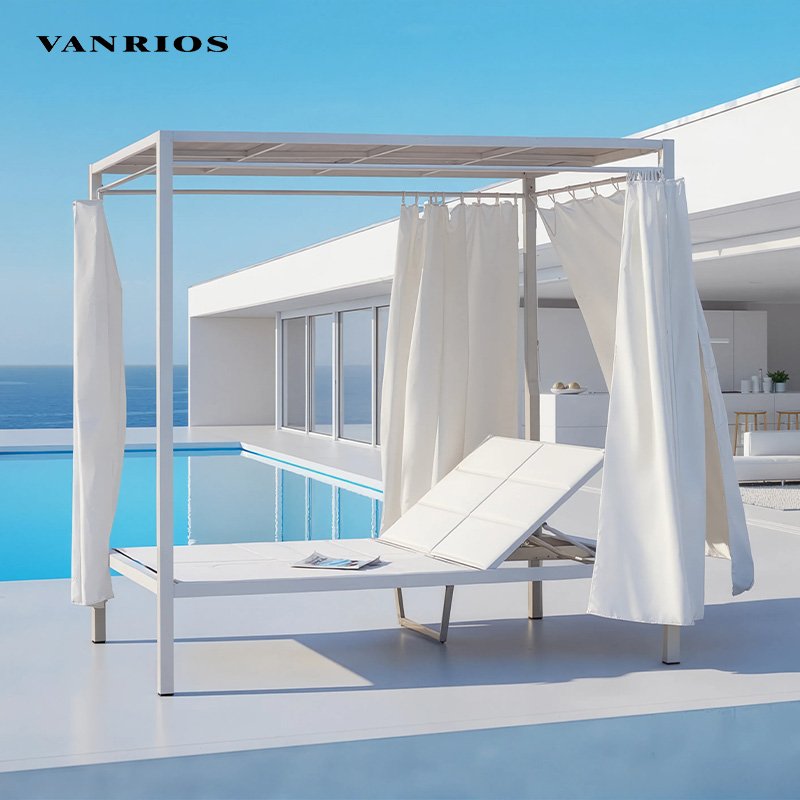
Proper spatial planning guarantees a seamless outdoor experience. You must define standard dimensions before buying anything. Round daybeds often require an 8-foot by 8-foot dedicated zone. Rectangular modular sets demand similar square footage. We always recommend a minimum 3-foot walkaround clearance. High-traffic patios need this extra room to prevent awkward bottlenecks.
Design configurations dictate how you will use the space. You can choose from several distinct functional styles.
Flat / Sunbed Style: This option offers a low visual profile. It works best for uninterrupted tanning. It never blocks your backyard view.
Canopy / Cabana Style: These designs are best for deep shading. They provide instant relief from harsh afternoon sun. You must ensure they include wind-venting mechanisms. Retractable shades prevent the unit from catching wind.
Modular Sets: These units break apart easily. They transform into separate sofas, ottomans, and coffee tables. They emphasize extreme versatility. However, they lack the unified structural rigidity of a solid piece.
Weight capacity serves as another crucial metric. Multi-person use puts immense stress on the frame. You should routinely check the commercial weight limits listed by the manufacturer. Target a minimum capacity of 500 pounds. Proper center support legs are vital. A well-built outdoor daybed easily supports multiple adults simultaneously.
You cannot compromise on comfort or fabric quality. Superior cushion architecture separates premium furniture from disposable alternatives. Standard poly-fill cushions act like giant sponges. They trap moisture deep inside the core. This trapped water breeds foul odors and rapid mildew growth.
Instead, look exclusively for reticulated foam. This high-tech, quick-dry foam features open cells. Water passes directly through the cushion rather than pooling inside. It dries within hours instead of days. This engineering marvel keeps your seating sanitary and comfortable.
Fabric grades demand equal scrutiny. Printed polyester fabrics look vibrant in the showroom. Sadly, they fade heavily in just one season. The sun destroys surface-level dyes quickly. Solution-dyed acrylics perform entirely differently. Manufacturers dye the liquid acrylic before spinning it into yarn. The color penetrates all the way through the thread. Brands like Sunbrella use this exact process. These fabrics provide ultimate UV resistance and superior mold prevention. You should also verify the slipcovers are machine-washable.
Hardware integrity often goes unnoticed until disaster strikes. A beautiful frame means nothing if the bolts snap. Highlight the absolute necessity of stainless steel or marine-grade hardware. Cheap zinc screws rust quickly. This rust bleeds down the legs and ruins expensive patio pavers. Upgrading to a premium Aluminum Daybed usually guarantees high-end hardware inclusion.
Navigating the outdoor furniture market requires caution. You must actively avoid the infamous wicker trap. Many budget brands use PVC (Polyvinyl Chloride) wicker. This cheap plastic becomes brittle quickly. It cracks in dry heat and unravels completely. Always look for PE (Polyethylene) wicker instead. PE maintains elasticity and resists extreme temperature swings safely.
Canopy wind hazards ruin many outdoor setups. Fixed-fabric canopies act exactly like boat sails during heavy storms. High winds catch the rigid fabric. This force can easily flip an entire heavy unit over. You must seek structural safety above all else. Retractable canopies let you fold the fabric away during storms. Slatted overheads allow wind to pass right through the structure.
Hidden assembly vulnerabilities create long-term headaches. Multi-piece, flat-pack frames often loosen over time. Daily use wiggles the connecting bolts constantly. You end up with a wobbly, unsafe structure. Contrast this against fully welded metal joints. A solidly welded frame never loosens. It provides permanent stability across decades of heavy use.
Maintaining luxury furniture requires minimal but consistent effort. Routine cleaning keeps your setup looking pristine. Provide a simple, chemical-free cleaning protocol for your patio. Mix mild dish soap into warm water. Scrub the surfaces using a soft bristle brush. Rinse everything thoroughly using a low-pressure garden hose. Never use pressure washers on woven materials or delicate fabrics.
Off-season storage determines how long your furniture lasts. Assess whether the frame can safely stay outside year-round. An aluminum frame survives freezing temperatures perfectly. Unsealed wood absolutely must move indoors. If you leave the frame outside, you must use breathable, custom-fit covers. Tight, non-breathable plastic tarps trap moisture inside. This creates a micro-climate that spawns aggressive winter mold.
Cushion care prevents premature degradation. Heavy rain saturates even the best materials temporarily. Best practices dictate storing cushions vertically after a storm. Standing them on their edges allows gravity to work efficiently. Water drains rapidly out the bottom zipper seam. Store them entirely indoors during deep winter months for maximum protection.
The perfect outdoor daybed aligns entirely with your specific climate realities. It must also match your daily lifestyle use. Poolside sunbathing requires flat profiles and breathable weaves. Shaded lounging demands robust, wind-vented cabana structures. You must balance these practical needs against your visual preferences.
We recommend a strict shortlisting logic to begin your search. Start by filtering exclusively for powder-coated aluminum frames. Pair these durable frames with solution-dyed acrylic cushions. This combination effectively eliminates most weather-related anxieties.
Your immediate next step requires a tape measure. Head outside and measure your target patio space meticulously. Review the product specification sheets carefully. Verify the exact dimensions, weight capacities, and manufacturer warranty terms before finalizing your order.
A: Yes, provided it utilizes suitable materials. Rust-proof metal frames handle rain effortlessly. However, cushions require more attention. You must ensure the product features reticulated, quick-dry foam. Water flows directly through this open-cell foam. Always use a breathable custom cover during prolonged stormy seasons to protect the fabric surface.
A: Absolutely. Premium models mirror indoor mattress comfort. You should look for specific cushion thickness metrics. We recommend targeting a thickness between 4 and 6 inches. High-density foam provides the necessary ergonomic support. This combination prevents your body from feeling the rigid metal frame beneath you during a nap.
A: Wind mitigation relies on weight and aerodynamics. A heavy metal frame naturally resists movement. If your model includes a canopy, you must retract or remove it before storms hit. Fixed canopies catch wind like sails. Finally, you can use specialized furniture weights to secure modular pieces together tightly.
A: You can set very high realistic expectations. A high-quality, powder-coated metal frame easily lasts 10 to 15 years. The cushions typically survive 3 to 5 years. Lifespan ultimately depends on daily UV exposure and proper maintenance. Regular cleaning and consistent winter storage significantly extend these estimated timeframes.


