

Views: 0 Author: Site Editor Publish Time: 2026-08-17 Origin: Site


High-end hospitality guests no longer just expect a simple place to sit. They actively seek curated, multi-use spaces offering deep privacy and luxury. Modern travelers demand environments matching their elevated lifestyle expectations. However, standard pool loungers often fail to deliver this premium feel. This aesthetic shortfall leads to underutilized outdoor spaces and missed ancillary revenue from food, beverage, and VIP reservations. Basic single-file seating simply cannot capture the exclusivity guests gladly pay for. Strategic placement of premium seating transforms underperforming patios and pool decks into high-ROI luxury touchpoints. Specifically, investing in a commercial-grade outdoor aluminum daybed fleet upgrades the entire poolside experience. You can elevate property appeal while minimizing daily operational overhead.
Transitioning to outdoor daybeds directly correlates with increased guest dwell time and higher poolside food and beverage (F&B) conversions.
Compared to permanent cabanas, daybeds offer superior spatial flexibility and lower upfront capital expenditure.
Commercial environments require strict evaluation of materials; an outdoor aluminum daybed provides the optimal balance of rust resistance, structural integrity, and ease of mobility for housekeeping.
Successful deployment requires mapping wind patterns, updating cleaning SOPs, and selecting commercial-grade, marine-rated fabrics.
Hospitality standards have shifted dramatically over the past decade. Guests define luxury outdoor living differently today. They want semi-private, multi-use relaxation zones. Exposed, single-file seating no longer impresses them. They crave intimate spaces where they can lounge, dine, and socialize seamlessly. When properties fail to provide these secluded micro-environments, guests often retreat to their air-conditioned rooms. This retreat represents a massive missed opportunity for property owners.
This shifting behavior directly impacts your bottom line. We measure this impact through the dwell time metric. Comfort and privacy strongly correlate with how long guests stay in revenue-generating zones. An uncomfortable guest leaves the pool deck quickly. A guest relaxing in an outdoor daybed stays for hours. Extended dwell time naturally increases poolside food and beverage consumption. People order more appetizers and cocktails when they feel entirely at ease.
Furthermore, premium seating creates immediate upsell opportunities. Resorts increasingly use reserved daybed packages to craft tiered experiences. You can charge a substantial daily rental fee for these premium spots. Standard chairs simply cannot command this direct daily revenue. You transform a basic required amenity into a highly profitable, highly sought-after asset. Offering VIP reservations for these units elevates the perceived value of your entire property. Guests perceive bottle service and dedicated attendants as natural extensions of this upgraded seating experience.
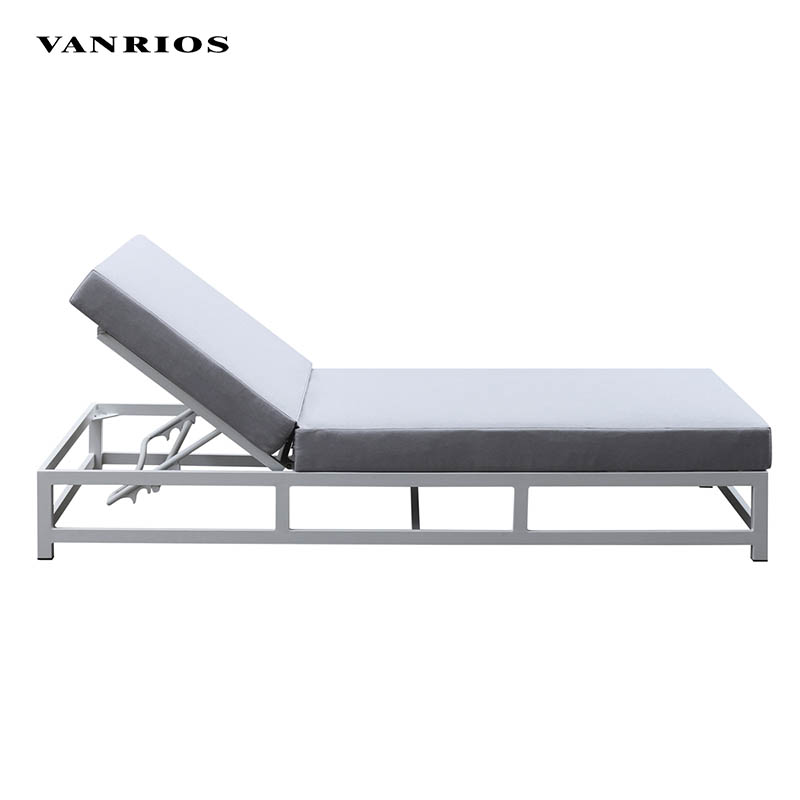
Property managers often debate between installing permanent cabanas and deploying flexible seating. A traditional cabana demands a massive spatial footprint. It dominates the landscape and reduces overall seating density. In contrast, an Aluminum Daybed offers modular adaptability. You can fit multiple luxurious beds in the exact same space one rigid cabana requires. This increased density boosts your capacity to host VIP guests during peak season.
Installation hurdles also distinctly separate these two options. Permanent structures trigger complex zoning requirements. You must secure building permits, pour heavy concrete anchors, and pass rigorous structural inspections. These delays cost you valuable seasonal revenue. Modular seating bypasses these bureaucratic roadblocks entirely. You unbox the furniture, place it on the deck, and immediately start generating income. You avoid contractors, construction noise, and unsightly safety fencing.
Dynamic layouts provide another major operational advantage. Seasonal events often require entirely different spatial configurations. You can easily reposition your daybed sets for private evening parties or changing solar trajectories. Permanent structures stubbornly force you to work around them. Flexible furniture works for you. When winter arrives or hurricane season approaches, staff can quickly move modular units into safe indoor storage.
Feature | Permanent Cabana | Modular Daybed |
|---|---|---|
Initial Capital Outlay | Very High (Construction + Labor) | Moderate (Furniture Procurement) |
Permitting Required | Yes (Often lengthy zoning delays) | No |
Spatial Footprint | Heavy / Fixed | Adaptable / High Density |
Relocation Ability | Impossible | Easy (Manageable by housekeeping) |
Commercial environments ruthlessly expose inferior furniture materials. Properties often learn this expensive lesson the hard way. Traditional wood and wicker options carry severe hidden maintenance costs. Teak looks beautiful initially but demands constant oiling, sanding, and sealing. If you skip this intense maintenance routine, the wood inevitably splits and turns an undesirable gray. Woven resin, often called synthetic wicker, suffers from severe UV degradation over time. High-traffic hospitality settings cause these woven strands to unravel, snap, and look incredibly cheap.
This operational reality highlights why aluminum remains the undisputed commercial standard. Aluminum provides distinct structural and operational advantages over every other material. First, it offers complete rust immunity because it contains no iron. This feature proves absolutely crucial for coastal properties constantly battling salt air. It also protects frames from the harsh chlorinated water constantly splashing off busy pool decks. Iron and steel furniture will eventually bleed rust, permanently staining your expensive patio pavers. Aluminum never will.
Second, aluminum boasts a remarkably superior weight-to-strength ratio. Commercial furniture must withstand moderate winds without blowing directly into the pool. However, it must remain light enough for daily housekeeping repositioning. Heavy steel requires multiple staff members and specialized dollies to move. Aluminum allows a single attendant to adjust the layout effortlessly during morning setup.
Modern finishing techniques further enhance this inherent durability. Manufacturers apply commercial-grade powder coating to these aluminum frames. Workers spray dry powder onto the metal and bake it in a high-heat oven. This thermal process creates a tough, protective skin. The baked-on finish resists chipping, fading, and scratching from heavy daily use. It provides a protective barrier ensuring your initial investment looks brand new for many seasons.
Deploying luxury seating requires careful operational planning. You must proactively mitigate risks specific to high-traffic hospitality environments. Success relies on mapping your property accurately and updating your daily maintenance procedures. You cannot simply place the furniture and forget about it.
First, conduct thorough wind and weather mapping across your exterior spaces. Every property features completely unique microclimates. Assess specific wind tunnels sweeping across your pool deck or rooftop lounge. You must determine if modular canopies will act as dangerous sails during sudden afternoon storms. High-wind areas often require weighted bases or specific tie-down anchor systems. We recommend auditing these local weather patterns before finalizing your furniture specifications.
Next, you must establish clear standard operating procedures (SOPs) for your ground staff. Daily maintenance dictates the true lifespan of your investment. Clear protocols prevent accidental damage caused by improper cleaning techniques.
Frame Wiping: Staff should wipe down frames daily using mild, non-abrasive soap to remove corrosive sunscreen and body oils.
Hose-Down Procedures: Implement weekly deep cleaning using low-pressure hoses. Strictly prohibit high-pressure power washing, which destroys powder coats.
Cushion Management: Determine if you will use breathable, all-weather foam or mandate nightly cushion storage in a dry environment.
Safety and compliance represent the final implementation hurdle. Commercial venues face strict liability standards. You must assess maximum weight capacities to ensure full bariatric compliance. Inspect the frames carefully to guarantee the absolute absence of dangerous pinch points where guests might injure their fingers. Finally, verify your fabric selections hold the necessary fire-retardant certifications required by local fire marshals.
Procuring the right fleet involves looking far beyond initial aesthetic appeal. You must evaluate the hidden, underlying architecture of the product. The unseen cushion construction often dictates your long-term operational success.
We strongly emphasize the necessity of premium cushion architecture. Commercial setups demand reticulated, quick-dry foam cores. This porous material allows rainwater to flow straight through the cushion rather than absorbing it like a sponge. It drastically reduces drying time after a heavy, unexpected rainstorm. Pair this specialized foam with solution-dyed acrylic fabrics. In these premium textiles, the color penetrates the entire fiber, much like a carrot. Cheaper fabrics only paint the surface, like a radish. These acrylics resist severe UV fading and actively prevent mold and mildew growth. Rapid drying minimizes operational downtime and maximizes your daily rental revenue.
You also need to read carefully between the lines of commercial warranties. Manufacturers often heavily market a generic "10-year warranty," but the fine print reveals a totally different story. You must distinguish between the frame, the finish, and the fabric coverage. They rarely share the same lifespan.
Component | Standard Commercial Coverage | What to Watch Out For in the Fine Print |
|---|---|---|
Aluminum Frame | 5 - 10 Years | Exclusions for coastal salt exposure or lack of maintenance. |
Powder-Coat Finish | 2 - 3 Years | Coverage dropping if frames are scratched by rough handling. |
Cushion Fabric | 3 - 5 Years | Strict fading limits and specific mold/mildew exclusions. |
Finally, we highly recommend executing a pilot program before finalizing a massive, property-wide order. Request a single unit for rigorous sample testing. Place it directly on your pool deck and observe how it handles your specific local weather. Let your housekeeping staff clean it repeatedly. Gather direct, unfiltered feedback from your paying guests. This small, inexpensive initial step prevents incredibly costly procurement mistakes down the road.
Upgrading your guest experience requires a delicate, thoughtful balance. You must merge stunning aesthetic appeal with harsh operational realities. Beautiful furniture completely fails if it cannot withstand commercial wear and tear. You need products delivering both style and incredible substance.
Ultimately, selecting this type of modular seating represents a highly strategic business investment. This durable material minimizes your daily maintenance routines and slashes long-term operational overhead. At the very same time, it dramatically maximizes the perceived luxury value of your property. Guests eagerly pay steep premiums for superior comfort, deep privacy, and distinct exclusivity.
Take the next step in transforming your underutilized outdoor spaces into profitable havens. We encourage procurement managers and property owners to request a comprehensive commercial catalog today. Book a dedicated layout consultation with our design team to optimize your deck space. You can also request physical material samples to feel the superior commercial-grade quality firsthand before making a final decision.
A: You should allocate a minimum of 36 inches of clear perimeter space around the unit. This specific spacing ensures full ADA compliance, allowing smooth wheelchair access. Furthermore, this ample clearance provides your housekeeping staff enough room to maneuver easily during daily cleaning and repositioning without disturbing neighboring guests.
A: Yes, they are highly recommended for saltwater environments. Bare aluminum naturally resists rust. However, commercial units also feature a thick, baked-on powder coating. This protective layer acts as a robust barrier against airborne chlorides and direct saltwater splashing. It completely prevents the structural pitting and corrosion often seen in steel furniture.
A: Securing furniture in high-wind zones requires a multi-step approach. First, utilize heavy, weighted bases designed specifically for commercial frames. Second, train your staff to detach or retract modular canopies when wind speeds exceed safe, predictable thresholds. Finally, consider specifying breathable mesh slings underneath cushions to significantly reduce overall wind resistance.
A: The ROI timeline typically ranges from one to three months during your peak operating season. You calculate this by tracking direct daily rental fees and monitoring the corresponding increase in poolside food and beverage spend. A single unit rented daily often pays for itself rapidly, generating pure profit shortly thereafter.


