

Views: 0 Author: Site Editor Publish Time: 2026-09-13 Origin: Site


Premature furniture degradation represents a massive financial drain for hospitality venues, corporate campuses, and multi-family properties. Property managers frequently replace exterior assets long before their expected lifecycle ends. This rapid deterioration stems from a mismatch between material capabilities and environmental realities. Balancing high-end aesthetic requirements with unforgiving climates requires a technical approach. Constant UV radiation, coastal salt air, high humidity, and heavy rainfall rapidly destroy residential-grade materials. Showroom aesthetics mean nothing if the underlying frame oxidizes within a single season. Moving beyond surface-level looks means evaluating material science, structural engineering, and protective coatings. You need data-backed procurement criteria to survive extreme weather and coastal storm zones. Understanding how specific materials react to environmental stressors allows you to select assets that maintain their structural integrity and visual appeal year after year.
Environmental degradation (galvanic corrosion, photochemical breakdown, fungal growth) dictates the true lifespan of outdoor assets.
Extruded, powder-coated aluminum currently offers the highest strength-to-weight ratio, heat dissipation, and baseline defense for coastal and high-moisture environments.
Fabric and cushion architecture (solution-dyed acrylics, reticulated foam) are as critical to weather resistance as the frame material.
Evaluating warranties requires scrutinizing "commercial use" clauses, specific exclusions for salt air, and hurricane or high-wind damage limitations.
Procuring durable Commercial Outdoor Furniture requires understanding the exact mechanisms that cause failure. Weather does not just wear down materials; it actively attacks them at a chemical and molecular level. Identifying these threats is the first step in mitigating them. We see assets fail repeatedly on job sites because buyers focus on design rather than environmental compatibility.
Oxidation and Rust: The reaction between oxygen and metal, heavily accelerated by moisture and airborne salinity.
Galvanic Corrosion: The destructive electrical interaction between dissimilar metals in a wet environment.
Photodegradation: The breakdown of polymer chains and pigments via continuous ultraviolet radiation.
Thermal Cycling: The physical expansion and contraction of rigid materials due to extreme temperature shifts.
Coastal environments present the most aggressive challenge to exterior assets. Airborne salinity acts as a powerful catalyst for oxidation. When salt settles on metal surfaces, it draws in moisture from the humid air, creating a highly conductive electrolyte solution. This solution accelerates the transfer of electrons, causing ferrous metals like standard steel to rust rapidly. You can literally watch low-grade steel degrade over a single summer on a beachfront patio.
Galvanic corrosion introduces another layer of complexity. This occurs when two dissimilar metals come into contact within a wet environment. For example, using stainless steel fasteners on a lower-grade aluminum frame triggers a reaction where the less noble metal sacrifices itself and corrodes. Preventing this requires using compatible metals or isolating them with non-conductive nylon washers. Field inspections often reveal frames that look pristine, yet the joints have completely failed due to galvanic reactions at the fastener level.
Ultraviolet radiation acts as a silent destroyer of synthetic materials. UV photons carry enough energy to break the covalent bonds within polymer chains. This process, known as photodegradation, affects plastics, resins, and synthetic fabrics. The damage is cumulative and irreversible.
In substandard materials, this breakdown manifests as fading colors, chalky surface residues, and severe embrittlement. A plastic chair that feels sturdy in May can become brittle enough to shatter under a user's weight by August. UV stabilizers and Hindered Amine Light Stabilizers (HALS) must be integrated into the raw material during manufacturing to absorb or reflect this harmful radiation. Surface-level UV sprays wash off in the rain and provide zero long-term protection.
Extreme temperature fluctuations force materials to expand and contract continually. This thermal cycling places immense stress on joints, welds, and mechanical fasteners. A 20-degree temperature swing can cause a long metal extrusion to expand by several millimeters. Over time, rigid materials crack, while mechanical connections loosen, compromising structural integrity.
Heat retention directly impacts user comfort and safety. Dark-colored metals and dense plastics absorb significant solar radiation. In direct summer sun, these surfaces can reach temperatures exceeding 140 degrees Fahrenheit, easily causing contact burns. Selecting materials with high thermal conductivity and rapid heat dissipation ensures the seating remains comfortable and safe for guests, even during peak afternoon sun.
Prolonged high humidity creates an ideal breeding ground for mold, mildew, and algae. These biological threats target porous materials, natural fibers, and trapped crevices. Fungal growth ruins the aesthetic appeal, degrades the underlying material, and poses respiratory risks to users. Health inspectors frequently flag hospitality venues for mildewed seating.
Moisture trapped inside poorly designed frames or dense cushion foam accelerates this process. Effective defense requires utilizing non-porous materials, antimicrobial treatments, and engineering designs that prioritize rapid drainage and maximum airflow. If water cannot escape a frame or cushion within a few hours, fungal proliferation is guaranteed.
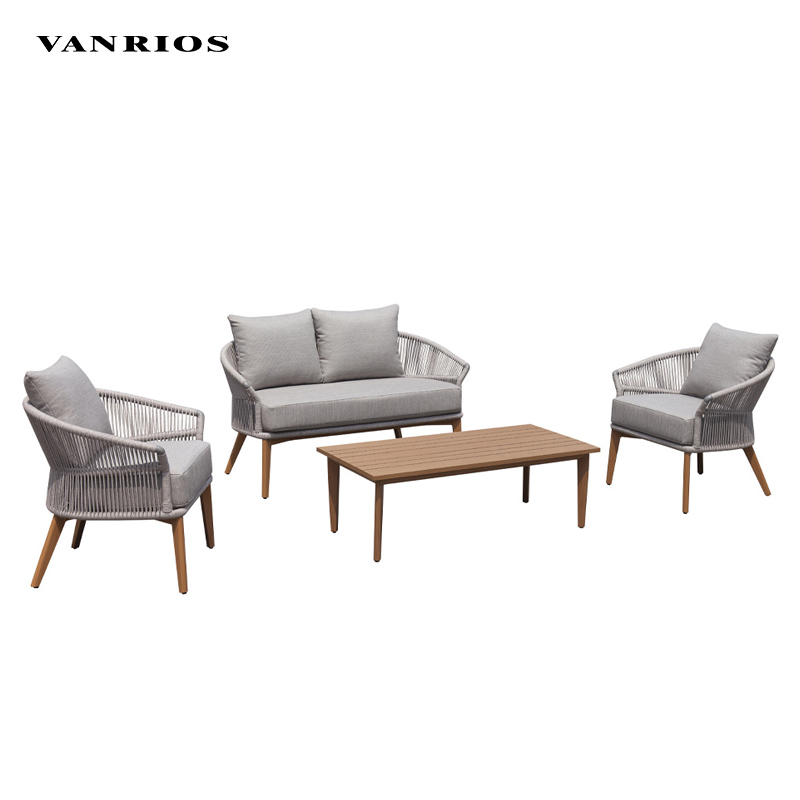
No single material excels in every environmental category. Evaluating core materials requires matching their specific physical properties against the primary weather threats of your location. You must weigh the structural benefits against the maintenance requirements.
High-density polyethylene (HDPE) and UV-stabilized resin wicker offer excellent resistance to moisture and salt. They do not absorb water, making them immune to rot and fungal degradation. High-quality synthetic wicker utilizes UV inhibitors throughout the entire polymer strand, ensuring long-term colorfastness even in direct sunlight.
However, these materials involve trade-offs. Dense HDPE retains heat and becomes uncomfortably warm. Furthermore, plastics lack the structural rigidity of metal. Under heavy loads and high temperatures, lower-grade resins warp or sag. Internal metal framing is often required to maintain structural integrity in high-traffic areas, which introduces a hidden corrosion risk if that internal frame is not properly sealed.
Grade-A teak remains the premier choice for natural wood. It relies on a high density of natural oils and silica to repel water and resist wood-boring insects. When left untreated, teak weathers to a silver-gray patina without losing its structural strength. It handles coastal environments exceptionally well.
The primary drawback is the intense maintenance overhead required to maintain its original warm color. Regular sanding, specialized cleaning, and applying teak sealers demand significant labor hours. For high-volume properties, this maintenance burden often outweighs the aesthetic payoff. If your maintenance team is already stretched thin, specifying natural wood will result in neglected, degraded assets.
Hurricane-prone zones frequently utilize Glass Fiber Reinforced Concrete (GFRC) and heavyweight composites. These high-mass materials provide exceptional wind resistance, often remaining stationary during severe storms without additional anchoring. They are impervious to salt air and UV degradation.
The trade-off lies in operational flexibility and structural load limits. Heavyweight composites are exceptionally difficult to move. Reconfiguring a patio layout for an event or performing routine deep cleaning around these pieces requires specialized equipment or multiple staff members. Additionally, elevated wooden decks may not support the concentrated point loads of heavy concrete seating.
Non-ferrous metals represent the industry standard for coastal and high-moisture environments. Aluminum contains no iron, making it fundamentally immune to red rust. When exposed to oxygen, it forms a microscopic layer of aluminum oxide that seals the surface and prevents further degradation. Even if the finish is scratched, the exposed metal simply oxidizes and protects itself.
Aluminum also boasts an excellent strength-to-weight ratio and rapid heat dissipation. It cools down quickly after direct sun exposure, enhancing user comfort. Compared to galvanized or stainless steel, aluminum provides superior baseline defense against salt air while remaining light enough for easy operational handling by staff.
Material | Salt Air Resistance | UV Resistance | Heat Dissipation | Maintenance Level |
|---|---|---|---|---|
HDPE / Resin | Excellent | High (if stabilized) | Poor | Low |
Grade-A Teak | High | High | Moderate | Very High |
Concrete / GFRC | Excellent | Excellent | Moderate | Low |
Extruded Aluminum | Excellent | Excellent (coated) | Excellent | Low |
Selecting the right material is only the baseline. How that material is processed, engineered, and finished determines its actual field performance. An Aluminum Outdoor Sofa Set must meet strict manufacturing tolerances to survive heavy daily use. You cannot rely on residential specifications for a commercial property.
While bare aluminum resists rust, it can pit and oxidize in harsh coastal air, leaving a rough, chalky surface. Electrostatic powder coating provides the necessary impermeable barrier. Dry powder is applied electrostatically and then cured in an oven at 400 degrees Fahrenheit to form a hard, continuous skin.
The effectiveness depends entirely on the application process. High-quality manufacturing requires a multi-stage pre-treatment wash (including alkaline cleaners and phosphate conversion coatings) to remove all oils and impurities before coating. The coating thickness, measured in mils, must meet commercial specifications like AAMA 2604 or 2605 standards. Inadequate pre-treatment or thin coatings lead to blistering, filiform corrosion, and flaking, exposing the raw metal beneath.
The structural integrity of aluminum furniture relies on the wall thickness of the extruded tubes. Residential furniture often uses thin-gauge aluminum (1.0mm to 1.2mm) to reduce weight and material costs. In a high-traffic environment, thin walls dent easily and bend under heavy loads. A single dropped chair can ruin a thin-gauge frame.
Commercial applications require a minimum wall thickness of 1.5mm to 2.0mm. Thicker gauges provide the necessary rigidity to withstand daily use, sudden impacts, and the stress of continuous movement by staff and guests. Internal ribbing or webbing within the extrusion profile can further enhance structural strength without adding excessive weight, ensuring the frame handles heavy dynamic loads.
Joint construction dictates the lifespan of the frame. Spot welding, where metal is fused at isolated points, leaves gaps. These gaps allow water to penetrate the hollow aluminum tubes. If water pools internally and freezes during a sudden temperature drop, the resulting expansion will split the metal frame wide open. We see this failure constantly in transitional climates.
Continuous, 360-degree circumference welding eliminates this risk. By sealing the joint completely, continuous welds prevent internal water pooling. Furthermore, full welds distribute stress evenly across the entire joint, preventing the structural failures common with spot-welded frames under heavy use. TIG welding is generally preferred for aluminum as it provides cleaner, stronger, and more precise joints than MIG welding.
The frame provides the structure, but the soft goods dictate the user experience. Cushions and upholstery endure the most direct contact with users and the environment. Poorly specified soft goods will fail long before the metal frame degrades, forcing expensive replacement cycles.
Standard printed polyesters apply color only to the surface of the fabric. Under intense UV exposure, this surface pigment breaks down quickly, leading to severe fading within months. They also degrade rapidly when exposed to chlorine from swimming pools or bleach used in cleaning.
Solution-dyed acrylics represent the gold standard for exterior upholstery. In this process, the UV-stable pigment is mixed directly into the liquid polymer before it is extruded into yarn. The color goes all the way through, much like a carrot, rather than just on the surface like a radish. This guarantees exceptional UV colorfastness and allows the fabric to be cleaned with heavy-duty bleach solutions (typically a 10:1 water-to-bleach ratio) without losing its color.
Standard polyurethane foam acts like a sponge. Once wet, it retains moisture for days, creating the perfect environment for mold and mildew. Wrapping standard foam in a waterproof barrier often fails, as seams and zippers inevitably allow water intrusion. Once water gets inside a waterproof casing, it cannot evaporate.
Coastal environments demand reticulated foam. This specialized material features an open-cell, porous structure created through thermal reticulation. It allows water to pass through almost instantly. When paired with breathable fabric and mesh drainage panels on the cushion underside, reticulated foam dries rapidly, eliminating the conditions required for fungal growth. Biocides are also frequently added to the foam during manufacturing for extra protection.
Operational efficiency relies on minimizing maintenance labor. Designing an Easy-Clean Outdoor Sofa Set requires specific architectural choices. Intricate weaves and deep crevices trap dirt, salt, and debris, requiring tedious scrubbing with specialized brushes.
Smooth, wipe-down frame architectures resist buildup and allow staff to clean surfaces rapidly. Cushion covers must feature heavy-duty, marine-grade zippers (like YKK) for easy removal and machine washing. Factory-applied hydrophobic and stain-resistant fabric treatments (such as PTFE coatings) prevent spills from setting, allowing staff to wipe away accidents before they require deep cleaning.
Selecting the right materials mitigates environmental risks, but procurement involves navigating logistical and contractual challenges. Failing to account for local weather extremes or misunderstanding warranty terms can result in significant operational disruptions and denied claims.
The primary advantage of aluminum—its lightweight nature—becomes a liability during high wind events. Coastal properties must balance the need for corrosion resistance with the reality of hurricane-force winds. Lightweight pieces become dangerous projectiles during a storm, threatening glass facades and guest safety.
Mitigating this risk requires strategic planning. Options include selecting heavier gauge aluminum profiles to increase baseline weight, utilizing integrated anchoring systems, or designing layouts that allow for rapid stacking and indoor storage. Alternatively, properties may blend materials, using heavyweight concrete for perimeter seating and aluminum for protected interior courtyards. You must establish a clear wind-speed threshold that triggers your staff's storm preparation protocol.
Manufacturer warranties require intense scrutiny before procurement. A warranty that looks comprehensive on paper often contains clauses that void coverage in demanding environments. You must differentiate between residential and commercial coverage; using residential furniture in a commercial setting instantly voids most warranties.
Look for specific exclusions related to salt air proximity. Many warranties void coverage if the furniture is placed within one mile of saltwater. Furthermore, check for "act of God" clauses that exclude damage from high winds or hurricanes. A true commercial warranty for a Corrosion-Resistant Outdoor Sofa Set will explicitly cover coastal deployment and specify the required maintenance intervals to keep the coverage active. You must maintain detailed logs of your fresh-water washdowns to prove compliance if you ever need to file a claim.
Audit the specific micro-climate of your property, documenting average humidity, UV index, and peak wind speeds to establish baseline material requirements.
Request physical material samples of powder-coated aluminum and solution-dyed acrylics to test heat retention and stain resistance on-site before committing to a large order.
Demand complete commercial warranty documentation and review the fine print for saltwater exclusions or wind damage limitations before issuing an RFP.
Establish a standardized maintenance protocol based on the manufacturer's requirements, including scheduled fresh-water washdowns, to ensure warranty compliance.
A: Aluminum is a non-ferrous metal, meaning it contains no iron and cannot produce red rust. Galvanized steel relies on a zinc coating for protection; once that coating is scratched, the underlying steel rusts rapidly in salt air. Aluminum forms a natural oxide layer that prevents further degradation even if scratched.
A: Maintenance requires regular fresh-water washdowns to remove accumulated salt and debris. Use a mild, non-abrasive soap and a soft brush. Avoid pressure washing, which can force water into joints or damage powder coatings. Inspect fasteners quarterly and apply a clear protective wax to metal frames twice a year.
A: High-quality synthetic resin wicker utilizes UV inhibitors mixed throughout the polymer, offering excellent fade resistance. However, extreme heat and UV can eventually cause plastics to become brittle. Powder-coated aluminum offers superior long-term UV resistance because the baked-on finish does not embrittle or degrade structurally under prolonged sun exposure.
A: With proper specification and maintenance, commercial-grade extruded aluminum frames deliver long-term structural performance under harsh outdoor conditions. Soft goods like solution-dyed acrylic cushions typically require replacement within 3 years due to physical wear, dirt accumulation, and eventual UV degradation, even with high-quality materials.
A: Most high-end commercial cushions are water-resistant, not waterproof. They utilize hydrophobic coatings to repel light rain and spills. For heavy rain, they rely on reticulated foam and mesh bottoms to allow water to pass through completely and dry quickly, rather than trying to block water entirely.
A: Powder coating creates a thick, dielectric (non-conductive) barrier over the metal surface. Galvanic corrosion requires an electrical connection between dissimilar metals through an electrolyte like saltwater. The powder coating breaks this circuit, isolating the metal and preventing the electrochemical reaction that causes corrosion.
A: Standard commercial aluminum furniture is generally stable in winds up to 30-40 mph depending on the specific profile and weight. However, during tropical storms or hurricanes with winds exceeding 50 mph, lightweight aluminum must be stacked, tied down, or moved indoors to prevent it from becoming a dangerous projectile.


