

Views: 0 Author: Site Editor Publish Time: 2026-09-15 Origin: Site


Designing an outdoor living space becomes exponentially more difficult when dealing with non-standard patio dimensions, architectural obstructions, and unpredictable, harsh weather conditions. Traditional, fixed-dimension outdoor furniture forces inefficient layouts in awkward spaces. Furthermore, heavy materials like wrought iron or degradable materials like natural wicker and untreated wood fail to provide long-term value when exposed to continuous UV radiation, moisture, and temperature fluctuations. Successfully outfitting an irregular patio requires a dual-focus evaluation: structural adaptability and material endurance. This guide breaks down the technical criteria for selecting an adaptable, weather-resistant outdoor sofa set, focusing on why powder-coated aluminum combined with modular design serves as the optimal baseline for complex outdoor footprints.
Material Superiority: Aluminum frames provide absolute rust immunity and a high strength-to-weight ratio, making them the most viable core material for long-term outdoor exposure.
Spatial Adaptability: A modular outdoor sofa set allows for micro-adjustments in layout, bypassing the spatial limitations of fixed-frame sofas on curved, narrow, or asymmetrical patios.
Cushion Technology Dictates Lifespan: True weather resistance requires evaluating not just the frame, but the specific chemical treatments, UV ratings, drainage capabilities, and color strategies of the textiles and foam.
Maintenance Realities: Even the most durable space-saving outdoor sofa requires strategic winterization, routine cleaning, and protective covers to maximize its lifecycle and protect the initial investment.
Establishing baseline requirements for outdoor furniture in non-standard spaces requires a strict evaluation of site conditions. You must maximize seating capacity without obstructing primary traffic flow. The furniture must also survive local climate extremes without requiring daily maintenance. Standard patio furniture rarely meets these operational demands because it relies on rigid dimensions that fight against natural architectural constraints.
Rigid three-seater sofas present immediate problems in constrained environments. Fixed L-sectionals fail when placed against angled walls, kidney-shaped pool decks, or intrusive landscaping features. Narrow balcony footprints reject deep, unyielding furniture frames. You cannot modify a fixed frame to navigate around a structural column or a built-in fire pit.
Forcing standard rectangular furniture into curved or asymmetrical hardscapes creates a "dead space" phenomenon. A rigid 90-degree sofa placed in a 120-degree corner leaves wasted triangular space behind it. This reduces usable square footage and disrupts the visual flow of the outdoor environment. Fixed dimensions restrict your ability to adapt when functional needs change.
Common spatial failures with fixed-dimension furniture include:
Blocking primary egress routes from sliding glass doors.
Forcing seating too close to heat sources like fire pits or grills.
Creating unusable gaps between the furniture back and curved retaining walls.
Overcrowding narrow balconies, leaving no room for foot traffic.
Common outdoor materials exhibit predictable failure points under environmental stress. Faux wicker often unravels and cracks under intense UV exposure. The plastic polymers degrade, lose their plasticizers, and become brittle over time. Steel frames oxidize rapidly at weld points when exposed to high humidity or coastal salt air. This oxidation compromises structural integrity and bleeds rust stains onto underlying concrete or composite decking.
Natural wood requires rigorous, labor-intensive annual sanding and sealing to prevent rot, checking, and splintering. Frequent replacement cycles become unavoidable when aesthetic appeal overrides environmental suitability. Selecting materials based solely on showroom appearance leads to rapid degradation in the field. You must evaluate materials based on their chemical and structural response to continuous weather exposure.
Comparing structural frame materials reveals clear differences in longevity and environmental resilience. An Aluminum Outdoor Sofa Set provides the most reliable foundation for exposed spaces. Its metallurgical properties directly address the failures of traditional materials, offering a stable platform that resists environmental degradation.
Aluminum possesses unique metallurgical properties that prevent traditional oxidation. It does not rust when exposed to rain, heavy humidity, or coastal salt air. When bare aluminum meets oxygen, it forms a microscopic, hard layer of aluminum oxide. This oxide layer seals the underlying metal and prevents further corrosion, acting as a self-healing barrier.
Manufacturers enhance this natural defense through advanced powder-coating processes. Powder coating applies a dry, colored powder to the metal electrostatically. The frame then cures in an oven at roughly 400 degrees Fahrenheit to form a continuous, durable skin. This secondary layer adds significant defense against physical scratches, chemical corrosion, and UV fading. It improves resistance to physical scratches, chemical corrosion, and UV fading to extend service life.
Frame Material | Corrosion Resistance | Weight Profile | Maintenance Requirement |
|---|---|---|---|
Powder-Coated Aluminum | Excellent (Immune to rust) | Lightweight | Low (Mild soap and water) |
Wrought Iron | Poor (High rust risk) | Very Heavy | High (Sanding, priming, repainting) |
Natural Teak Wood | Moderate (Resists rot, but grays) | Heavy | High (Annual sanding and oiling) |
Tubular Steel | Low (Rusts heavily at welds) | Heavy | Moderate (Requires frequent touch-ups) |
Many people worry that metal furniture will overheat in direct sunlight. However, aluminum dissipates heat much faster than steel or wrought iron. It possesses high thermal conductivity. This means it releases absorbed heat rapidly once shaded or when a breeze occurs, preventing the frame from causing contact burns.
Frame color plays a significant role in reflecting or absorbing solar radiation. White, light grey, or beige frames actively reflect sunlight. This keeps the physical structure cooler to the touch. Dark charcoal, bronze, or black frames absorb solar radiation and retain more heat. Selecting lighter frame colors mitigates thermal discomfort in high-sun exposure environments like rooftop decks or unshaded southern exposures.
Extruded aluminum provides exceptional structural support for heavy, continuous use. Manufacturers use specific alloys, such as 6061 aluminum, to achieve high tensile strength. Despite this strength, the material remains remarkably light. This high strength-to-weight ratio is a critical factor for dynamic patio layouts. You can easily lift and reposition an aluminum frame without specialized equipment or multiple people.
This mobility allows you to adapt the space for different events or seasons. You can move the furniture to follow the shade during summer months. You can also quickly relocate pieces away from the patio edge before a severe storm. Heavy iron or dense wood furniture severely limits this necessary spatial flexibility, locking you into a single layout.
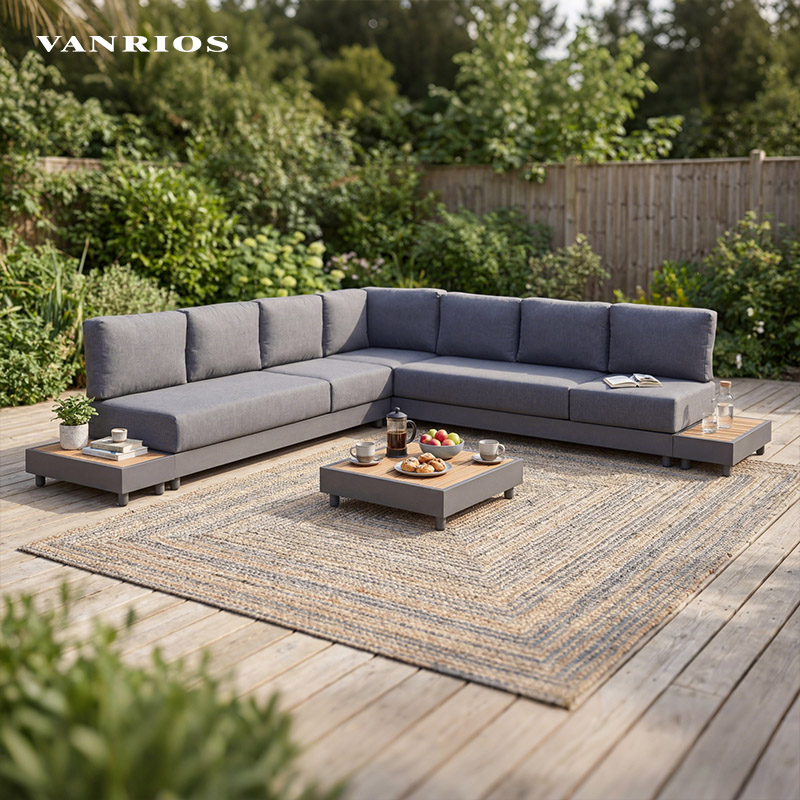
Specific modular features translate directly into functional solutions for complex architectural layouts. A Modular Outdoor Sofa Set provides the flexibility needed to navigate irregular spaces. You can configure individual pieces to match the exact geometry of your patio, bypassing the limitations of fixed frames.
Modular systems consist of independent armless chairs, corner units, left-arm facing modules, right-arm facing modules, and ottomans. You can separate these individual components to navigate around permanent obstacles. This flexibility allows you to route seating around fire pits, structural columns, or built-in planters. You can also leave intentional gaps for narrow pathways intersecting the patio.
Layout strategies change based on specific irregular shapes. For long, narrow spaces, you can break a large sectional into a split-seating arrangement. Place two smaller sofas facing each other instead of forcing one massive L-shape into a tight corner. For curved retaining walls, you can stagger armless chairs to loosely follow the radius. Modular design prevents the layout from fighting the architecture.
Constrained areas demand highly efficient furniture profiles. A Space-Saving Outdoor Sofa utilizes low-profile frames to reduce visual clutter. Thinner armrests and streamlined backs maximize the internal seating area. This minimizes the physical footprint without sacrificing seating capacity, allowing you to fit more guests into a smaller square footage.
Strategic use of multi-functional pieces further maximizes utility in tight spaces. Ottomans serve as central coffee tables when topped with a rigid tray. They function as overflow seating during large gatherings. You can also attach them directly to armless chairs to create impromptu chaise extensions. This versatility eliminates the need to clutter the patio with single-purpose furniture.
Modular sections often drift apart on sloped or heavily textured pavers. This lateral movement creates dangerous gaps between seating units. You must evaluate mitigation hardware to keep the configuration stable. Heavy-duty structural clips, often made of high-density nylon or powder-coated steel, connect the underside of the frames, locking them together rigidly.
Uneven terrain requires adjustable leveling feet on each module. These threaded shanks allow you to raise or lower individual corners independently. This ensures the sofa sits perfectly flat, even on natural flagstone or stamped concrete. High-friction rubber glides provide additional grip. They prevent the entire locked assembly from sliding across smooth concrete or composite decking during use.
A Weather-Resistant Outdoor Sofa Set is only as durable as its softest components. The aluminum frame will easily outlast the cushions if the textiles fail. The fabric and foam cushions are engineered for a 3-year service life under normal outdoor use. You must establish strict criteria for fabric and foam selection to ensure true longevity and prevent internal mold growth.
Understanding the technical difference between water-resistant and waterproof materials dictates how the furniture performs in the rain. Water-resistant coatings sit on the surface of standard fabrics like printed polyester. These topical treatments wear off rapidly through friction, washing, and UV exposure. Solution-dyed acrylics inherently resist moisture at the fiber level. The material itself repels water naturally without relying on a temporary coating.
Completely waterproof fabrics often create secondary problems. They lack breathability, which traps internal moisture inside the cushion core. Trapped moisture quickly leads to internal mold and mildew growth. Breathable, water-repellent fabrics allow water to bead off the surface while allowing internal condensation to evaporate safely through the material.
Industry-standard testing for lightfastness determines how long a fabric retains its color under direct sun. Solution-dyed fabrics outperform surface-dyed alternatives in high-sun environments. During the solution-dyeing process, color pigments mix into the liquid acrylic polymer before extrusion into yarn. The color goes entirely through the fiber, much like a carrot.
Surface-dyed fabrics only hold color on the exterior, like a radish. They fade rapidly under harsh UV radiation, turning patchy and washed out within a single season. Strategic color selection also impacts longevity. White or light-colored cushions actively reflect harsh sunlight. This reduces surface heat buildup, protects the seating areas from thermal degradation, and keeps the fabric cooler for users.
Cushion core construction dictates how quickly the furniture recovers from rain. Standard polyurethane foam acts like a dense sponge. It holds water for days, promoting rapid mold growth and rendering the furniture unusable after a storm. Reticulated foam features an open-cell structure. This large-pore design allows rapid water drainage directly through the cushion.
Foam Type | Water Drainage | Drying Time | Mold Resistance |
|---|---|---|---|
Reticulated (Open-Cell) Foam | Excellent (Water flows through) | Fast (Hours) | High |
Standard Polyurethane | Poor (Absorbs water) | Slow (Days) | Low |
Closed-Cell EVA Foam | Excellent (Repels water) | Fast (Surface only) | High (But very rigid/uncomfortable) |
Mesh under-panels on cushion covers facilitate this drainage process. The bottom of the cushion cover utilizes a porous, PVC-coated mesh material. This allows gravity to pull water out of the foam quickly. It also facilitates internal airflow, drying the cushion core rapidly after a heavy storm and preventing stagnant moisture buildup.
Balancing upfront material selection with long-term maintenance labor ensures sustained performance. You must understand the realities of outdoor furniture care. Neglecting routine maintenance accelerates degradation, regardless of the materials used. Proper lifecycle management protects the structural integrity of the furniture and extends the lifespan of the textiles.
Dispel the myth of zero-maintenance outdoor furniture immediately. You cannot leave premium furniture uncovered year-round without consequence. Airborne pollutants, tree sap, and acidic bird droppings degrade powder coatings over time. Ice expansion inside unsealed frame joints can damage modular connection points and snap leveling feet.
Breathable, custom-fit furniture covers are necessary during heavy rain seasons or winter months. These covers protect the powder coating and preserve textile integrity. The covers must feature ventilation flaps to prevent trapped condensation. Using cheap plastic tarps traps moisture against the frame and accelerates mildew growth on the cushions.
During extreme off-seasons, you must store cushions indoors or in a watertight deck box. Freezing temperatures and heavy snow loads will eventually compromise even the best reticulated foam, breaking down the cellular structure and causing the cushions to lose their shape and support.
Aluminum frames simplify outdoor maintenance significantly. They require only mild soap and water to remove environmental buildup. You do not need specialized chemical cleaners, abrasive scrubbers, or pressure washers. A soft microfiber cloth easily wipes away pollen, dust, and dirt from the smooth powder-coated surface.
Solution-dyed acrylic fabrics require periodic cleaning to prevent dirt from embedding in the weave. Brush off loose dirt, spray a mild soap solution, and use a soft-bristle brush to agitate the surface. Rinse thoroughly with a garden hose and allow the cushions to air dry completely. Never use a heated dryer on outdoor fabrics, as it will shrink the material and destroy the water-repellent finish.
Deploying lightweight modular furniture in exposed environments presents specific physical risks. You must anticipate these challenges and implement robust mitigation strategies before installation. Proactive planning prevents property damage and ensures user safety.
The lightweight nature of aluminum makes it susceptible to shifting in high winds. High-rise balconies, open coastal patios, and rooftop decks experience severe wind uplift forces. Unsecured modular pieces can blow across the deck, causing damage to railings, glass, or the furniture itself.
Mitigation requires specific anchoring and weighting strategies. Select heavier gauge aluminum frames with thicker wall extrusions for high-wind zones. Utilize weighted modular clips made of solid steel to lower the center of gravity. In extreme cases, tether the hidden underside of the frame to architectural anchor points using discrete stainless steel cables.
Metal frames can gouge composite decking or natural wood over time. Dragging an aluminum chair across a soft cedar deck leaves deep, permanent scratches. Factory-standard foot glides often consist of hard, brittle plastic. These standard glides wear down quickly, exposing the raw metal edge to the deck surface.
Mitigation involves evaluating and replacing these factory-standard glides immediately. Swap them for specialized nylon or heavy-duty felt-bottomed outdoor glides. Nylon provides a smooth, frictionless surface that glides safely over composite boards. Inspect these glides annually. Replace them the moment they show significant wear to protect your premium decking surfaces.
Measure your exact patio dimensions, noting all curves, angles, and permanent architectural obstructions to determine the maximum footprint.
Map out primary traffic flows, ensuring you leave a minimum of 36 inches of clearance for main walkways and 18 inches between seating and fire pits.
Request physical fabric swatches from the manufacturer to test local environmental compatibility, colorfastness, and heat retention in your specific sun exposure.
Verify the furniture utilizes fully welded, powder-coated aluminum frames rather than bolted steel or untreated metals.
Inspect the underside of the modules to confirm the inclusion of heavy-duty modular connection clips and adjustable leveling feet for uneven terrain.
A: Yes, aluminum frames withstand freezing temperatures without cracking or rusting. However, you must remove the cushions and store them indoors to prevent moisture damage and freezing. Cover the bare aluminum frame with a breathable, custom-fit protective cover to shield the powder coating from ice, dirt, and debris. The fabric and foam cushions are engineered for a 3-year service life under normal outdoor use.
A: Use heavy-duty structural clips or nylon brackets underneath the seating units to lock the frames together. For uneven surfaces like natural stone pavers, adjust the threaded leveling feet on each module. High-friction rubber glides also help grip the surface and prevent lateral movement across the deck.
A: No fabric is entirely waterproof without sacrificing necessary breathability. True weather resistance relies on solution-dyed acrylic fabrics that repel water naturally. Pair this fabric with reticulated, open-cell foam cushions. This combination allows rainwater to drain straight through the cushion rather than pooling and causing internal mold.
A: Dark colors absorb more solar radiation and will become warmer than white or light grey frames. However, aluminum dissipates heat rapidly. It cools down much faster than steel or wrought iron once shaded. Using light-colored cushions can further reduce the overall surface heat of the seating area.
A: Always leave a minimum of 30 to 36 inches of clearance for primary walkways. For secondary paths or spaces between the sofa and a fire pit, allow at least 18 to 24 inches. This ensures comfortable navigation without making the irregular patio feel cramped or restricted.
A: Yes. Factory-standard glides are often basic, hard plastic. If you have premium composite decking or soft natural wood, replace them with specialized nylon or heavy-duty felt-bottomed outdoor glides. This prevents the metal frame from scratching or gouging the deck surface during repositioning.


