

Views: 0 Author: Site Editor Publish Time: 2026-09-10 Origin: Site


High-traffic hospitality environments demand outdoor spaces that deliver luxury aesthetics without compromising on rigorous structural integrity. Off-the-shelf outdoor furniture consistently fails in commercial settings. It suffers from rapid degradation, non-compliant safety standards, and an inability to match specific hotel brand guidelines. Procurement teams face the constant challenge of balancing bespoke design requirements with strict durability mandates. You cannot simply place residential seating on a busy resort pool deck and expect it to survive the season. To ensure seamless property integration, hotel designers and procurement managers must understand how to properly specify, customize, and source commercial outdoor seating. We will break down the technical evaluation, bespoke design services, and customization process for hospitality projects. You need actionable strategies to navigate material selection, spatial planning, and supply chain logistics effectively.
Commercial viability requires specific engineering standards, including reinforced joints, commercial-grade powder coating, and high-density marine-grade foam, which are absent in retail furniture.
Customizing an aluminum outdoor sofa set allows hotels to dictate exact dimensions, modularity, and brand-specific finishes while maintaining superior rust resistance and weight-to-strength ratios.
Procuring an OEM outdoor sofa set enables properties to leverage bespoke design services to develop proprietary designs that align perfectly with their architectural zones, from poolside cabanas to rooftop lounges.
Successful deployment of bulk outdoor furniture requires rigorous spatial planning, integration with hardscaping, ADA compliance verification, and phased delivery logistics managed by commercial specialists to mitigate supply chain risks.
The physical demands placed on hospitality furniture far exceed residential use. Guests of varying weights use the seating continuously throughout the day. Staff members drag chairs across abrasive concrete pool decks during nightly setups. Retail furniture relies on thin-walled metals and basic spot welds to keep manufacturing costs low. These construction methods inevitably fail under commercial strain. A true Commercial Grade Patio Set requires upgraded engineering across every single connection point.
Commercial frames utilize thicker metal gauges, typically ranging from 1.5mm to 2.0mm in wall thickness. This prevents the frame from bending, warping, or denting upon impact. Manufacturers use full-circumference continuous TIG welds rather than standard spot welds. Continuous welding fuses the metal entirely around the joint. It distributes weight evenly and eliminates weak points where stress fractures typically occur. Internal joint reinforcements, known as gussets, provide additional bracing at high-stress junctions like armrests and back legs. These structural upgrades prevent catastrophic failure and ensure guest safety.
Feature | Retail Standard | Commercial Hospitality Standard |
|---|---|---|
Frame Wall Thickness | 0.8mm - 1.2mm | 1.5mm - 2.0mm+ |
Welding Technique | Spot welding (MIG) | Full-circumference continuous welding (TIG) |
Powder Coating | Standard single-layer | AAMA 2604/2605 multi-stage pre-treated |
Cushion Core | Standard polyurethane | High-density reticulated (quick-dry) foam |
Hardware | Zinc-plated steel | 304 or 316 Marine-grade stainless steel |
Selecting the right frame material dictates the maintenance schedule and lifespan of the furniture. Wood requires constant oiling, sanding, and sealing to prevent rot and splintering. Steel offers immense strength but carries a high risk of rust, especially in coastal environments or near chlorinated pools. Resin and plastic options often lack the premium aesthetic required by luxury hotel brands and become brittle under prolonged UV exposure.
Extruded and cast aluminum provide the optimal balance for hospitality environments. Aluminum naturally forms a protective oxide layer, making it inherently rust-resistant. It offers an ideal weight-to-strength ratio. The frames are heavy enough to withstand moderate wind gusts on rooftop lounges, yet light enough for staff to easily reposition during event setups. When you specify an Aluminum Outdoor Sofa Set, you secure a foundation that survives diverse climates while drastically reducing ongoing maintenance overhead. Extruded aluminum allows for complex internal channel designs, adding rigidity without unnecessary bulk.
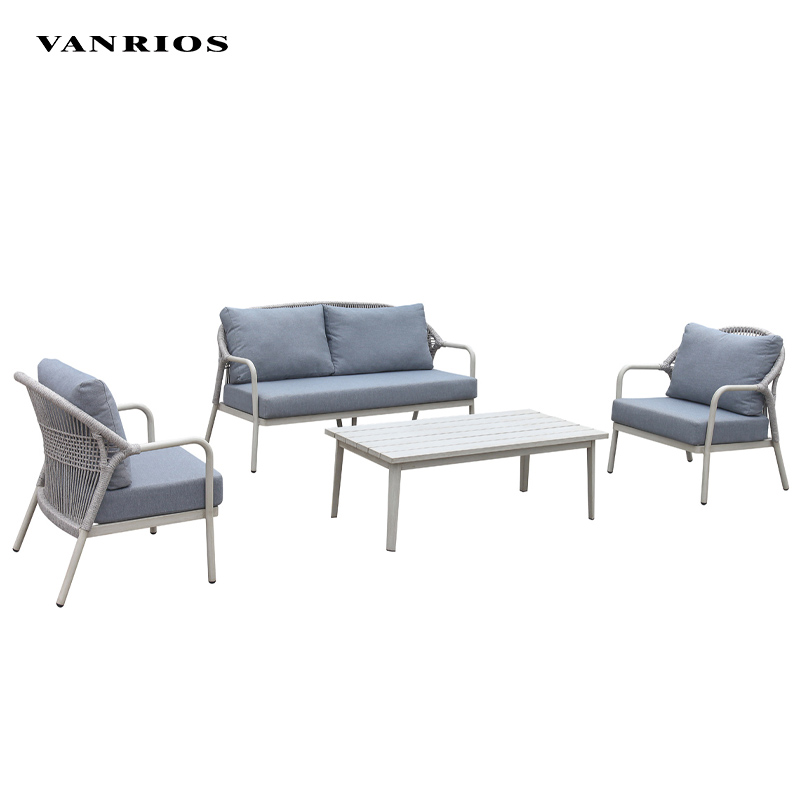
Hotel architecture rarely accommodates standard furniture dimensions perfectly. Customization allows procurement teams to specify exact seating depths, backrest angles, and overall footprints. A dining terrace requires upright seating with a shallower depth to encourage proper posture while eating. Conversely, a poolside cabana demands deep, relaxed seating with angled backrests for extended lounging. You must dictate these dimensions in the initial design phase to ensure the furniture fits the intended use case.
Modularity serves as a primary operational tool. Hotels frequently reconfigure outdoor spaces to host different events. A modular system allows staff to transform a daytime lounging area into an evening cocktail reception layout within minutes. Custom modular pieces must include heavy-duty, hidden locking mechanisms. These clips keep the sectional components firmly attached during use, preventing dangerous gaps from forming between seats. They must remain easy for staff to disengage when redesigning the space.
The finish applied to outdoor furniture must withstand harsh environmental factors. Commercial powder coating specifications, such as AAMA 2604 or AAMA 2605 standards, ensure the paint resists UV fading, chalking, and salt-spray corrosion. The application process involves rigorous pre-treatment. Factories use sandblasting and chemical washes to ensure the powder adheres permanently to the aluminum substrate. A zinc-rich primer layer often precedes the final color coat for coastal properties.
Customization extends directly to brand alignment. Hotels require manufacturers to color-match frames to specific Pantone or RAL codes, ensuring the furniture reflects the property's exact brand identity. Bespoke design services take this a step further. Manufacturers translate brand motifs into physical elements. This includes custom table inlays featuring the hotel logo, signature frame shapes that mimic the property's architecture, or proprietary woven rope patterns exclusive to the resort.
Fabric selection dictates the visual longevity of the seating. Hospitality projects require solution-dyed acrylic fabrics. Unlike piece-dyed fabrics where color only sits on the surface, solution-dyed fibers have color integrated throughout the material. This prevents fading under intense sunlight. Commercial specifications demand high rub counts, often exceeding 30,000 Wyzenbeek double rubs, to withstand constant friction. The fabrics must also be bleach-cleanable to allow housekeeping to remove stubborn stains like sunscreen or spilled wine quickly.
The internal cushion engineering is equally important. Standard foam acts like a sponge, trapping water and breeding mold. Commercial outdoor cushions utilize reticulated foam. This open-cell structure allows water to pass directly through the cushion, drying rapidly. Encasing this foam in a waterproof ticking provides a secondary barrier. This combination minimizes maintenance downtime and ensures rapid turnover of seating areas immediately after a rainstorm.
When sourcing custom furniture, procurement teams must choose between Original Design Manufacturing (ODM) and Original Equipment Manufacturing (OEM). ODM involves selecting an existing design from a manufacturer's catalog and modifying specific elements, such as the fabric color or frame finish. This approach offers faster lead times and lower upfront costs, making it suitable for single-property updates or tight deadlines.
OEM involves commissioning entirely custom molds and proprietary designs built from the ground up. Developing an OEM Outdoor Sofa Set requires a higher initial investment but delivers substantial returns for multi-property rollouts. It guarantees strict brand consistency across different locations. It also ensures exclusive aesthetics; competing hotels cannot purchase the same furniture designs. OEM partnerships allow hotels to engineer solutions tailored precisely to their operational workflows and spatial constraints.
Executing an OEM project requires a structured, multi-stage specification process to eliminate errors before mass production begins. Skipping any of these steps leads to costly manufacturing mistakes.
Concept Development: Aligning on aesthetic goals, functional requirements, and target budgets.
CAD Drafting: Creating precise 3D models detailing every dimension, joint, and hardware placement.
Material Selection: Finalizing metal gauges, foam densities, and fabric grades based on the property's climate.
Physical Prototyping: Manufacturing a single sample unit for real-world evaluation and ergonomic testing.
Stress Testing: Subjecting the prototype to static load tests, drop tests, and environmental exposure.
Final Approval: Signing off on the golden sample before bulk manufacturing commences.
Drafting the Request for Proposal (RFP) requires highly technical specification language. Ambiguity leads to vendor misinterpretation and subpar manufacturing. Instead of requesting "durable metal frames," the RFP must state: "Frames must be constructed from 6063-T5 extruded aluminum with a minimum wall thickness of 1.8mm, utilizing full-circumference TIG welding at all structural joints." This precise language establishes an enforceable quality baseline.
A successful outdoor furniture deployment integrates seamlessly with the property's distinct zones. Each area presents unique functional requirements. Dining patios demand upright chairs with appropriate clearance under tables to ensure guest comfort. Poolside zones require loungers with adjustable backrests and side tables built to withstand constant exposure to chlorine and harsh cleaning chemicals.
Rooftop lounges present specific environmental challenges, primarily high winds. Furniture in these zones requires heavier frame construction or hidden weight systems to prevent pieces from blowing over or off the roof. Developing a detailed floor plan is non-negotiable. This plan must map furniture placement against fixed hardscaping features like fire pits, pergolas, water features, and lighting conduits. Accurate zone mapping guides the construction process and ensures the final layout matches the architectural vision.
Property Zone | Primary Furniture Requirement | Key Engineering Focus |
|---|---|---|
Poolside Cabanas | Deep seating, modular sectionals | Chlorine resistance, reticulated foam |
Dining Terraces | Upright chairs, standardized tables | Scratch-resistant table tops, stackability |
Rooftop Lounges | Heavyweight sofas, anchored tables | Wind mitigation, UV-resistant finishes |
Fire Pit Enclosures | Curved sectionals, low lounge chairs | Heat-resistant materials, spark-proof fabrics |
Hospitality environments must adhere to strict accessibility standards. The Americans with Disabilities Act (ADA) dictates specific spatial clearances for wheelchair accessibility and safe guest transit. Customized dimensions help solve tight layout constraints without violating these safety codes.
When planning traffic flow, designers must maintain minimum clearance paths, typically 36 inches wide, between furniture groupings. Seat heights play a major role in accessibility. Lounge seating that sits too low prevents guests with limited mobility from standing up safely. Customizing seat heights to sit between 17 and 19 inches, combined with firm, reinforced armrests, provides the necessary leverage for safe transfer and egress. Prioritizing these metrics ensures an inclusive and compliant guest experience.
Managing the procurement of custom furniture for a large hotel project involves coordinating multiple moving parts. Partnering with dedicated commercial specialists provides a strategic advantage. These specialists oversee the entire lifecycle of the project, from initial product selection and layout design to final delivery and installation.
Having a single point of contact streamlines communication. It bridges the gap between hotel procurement teams, interior designers, and the overseas manufacturing floor. Commercial specialists understand how to translate design intent into manufacturing reality. They anticipate production bottlenecks, manage quality control expectations, and ensure the final product aligns perfectly with the approved prototypes.
Custom commercial orders operate on extended timelines. Procurement teams should anticipate lead times ranging from 12 to 20 weeks. This window accounts for CAD approvals, material sourcing, bulk manufacturing, and global freight transit. Variables such as port congestion, customs inspections, and raw material shortages can impact these schedules.
To mitigate delays, project managers must structure phased delivery schedules. Instead of demanding all items arrive simultaneously, deliveries should align with construction milestones. For example, dining chairs can arrive as the restaurant hardscaping finishes, while pool loungers ship later to coincide with the pool deck completion. Phased deliveries prevent unboxed Bulk Outdoor Furniture from sitting in active construction zones where it risks damage before the property even opens.
Understanding the nuances of a commercial warranty protects the property's investment. Retail warranties often void immediately if the product is placed in a commercial setting. A true commercial warranty breaks down coverage by component. Expect 5 to 10 years of coverage on the aluminum frame against structural failure. Powder coat finishes typically carry a 3-year warranty against peeling or blistering. Performance fabrics usually offer a 5-year warranty against severe UV degradation.
Guaranteed replacement part availability is just as important as the warranty itself. If a single cushion cover tears or a foot glide breaks, the hotel must be able to order that specific part rather than replacing the entire sofa. Evaluating the long-term lifecycle performance involves factoring in the initial bulk cost, projected routine maintenance, and the frequency of expected component replacements over a ten-year operational period.
Manufacturing custom furniture at scale introduces inherent supply chain risks. The most common issue is unauthorized material substitution by the factory to cut costs, such as using lower-density foam or thinner aluminum tubing than specified. Shipping damage during ocean freight also poses a significant threat to project timelines.
Mitigating these risks requires strict oversight. Procurement contracts must mandate third-party quality control inspections at the factory before container loading begins. Inspectors verify dimensions, test weld strength, and check finish consistency against the golden sample. Require the manufacturer to provide detailed material certificates proving the exact grade of aluminum and fabric used in production.
The arrival of a shipping container marks the beginning of the installation phase, which carries its own logistical hurdles. Unboxing, assembling, and placing hundreds of pieces of furniture consumes massive amounts of labor and time. Improper assembly by untrained temporary staff can compromise the structural integrity of the furniture.
To mitigate installation challenges, specify fully welded, pre-assembled frames wherever possible. While this reduces the number of items that fit into a single shipping container, the savings in on-site labor and the guarantee of factory-level structural integrity far outweigh the extra freight costs. If assembly is unavoidable, negotiate white-glove installation services directly into the procurement contract. This ensures professional teams handle the setup, remove all packaging debris, and place the furniture precisely according to the approved zone maps.
Map property zones against architectural features to determine exact functional requirements and spatial constraints before sourcing.
Draft a highly specific RFP that dictates material gauges, foam density, continuous welding standards, and commercial finish requirements.
Filter manufacturers based on their ability to provide transparent engineering specs, proven OEM capabilities, and bespoke design consultation.
Request and rigorously stress-test physical prototypes before authorizing any bulk manufacturing.
Structure phased delivery schedules and mandate third-party quality control inspections to mitigate supply chain risks.
A: Commercial grade sets feature thicker aluminum walls (1.5mm or higher), full-circumference continuous TIG welds, and internal joint gussets. They utilize AAMA-certified powder coating for superior weather resistance and incorporate high-density, quick-dry reticulated foam encased in performance fabrics designed for heavy daily use.
A: The timeline typically ranges from 12 to 24 weeks. This includes initial CAD design, physical prototyping, client revisions, bulk manufacturing, and global ocean freight. Phased planning is essential to align delivery with construction milestones.
A: Yes. Manufacturers offering bespoke services can color-match aluminum frames using specific RAL or Pantone codes. The custom powder coating process ensures exact brand alignment while maintaining commercial-grade resistance to UV fading and salt-spray corrosion.
A: With proper routine maintenance, commercial aluminum frames deliver durable outdoor performance for hospitality applications. Cushions and performance fabrics generally require replacement within 3 years, depending on the local climate, UV exposure, and the volume of guest traffic.
A: Specify seat heights between 17 and 19 inches and include firm armrests to assist with safe transfer. Integrate the furniture dimensions with your hardscaping floor plan to guarantee minimum 36-inch clearance paths for wheelchair accessibility and safe transit.


