

Views: 0 Author: Site Editor Publish Time: 2026-06-29 Origin: Site


Designing a durable exterior cooking space requires balancing structural integrity, extreme weather resistance, and heavy appliance compatibility. A beautiful setup quickly loses its charm when cabinets warp or rust. Every climate tests these structures relentlessly. Historically, masonry, wood, and stainless steel dominated the backyard market. However, these traditional options often fail against persistent moisture, salt air, and intense sunlight. Recently, powder-coated aluminum and high-density polyethylene have aggressively disrupted the space. Our comprehensive guide provides an evidence-based comparison of Aluminum Outdoor Kitchens against traditional materials. We will evaluate installation risks, environmental resilience, and long-term durability tailored to your specific climate. You will discover exactly how different substrates perform under pressure. Ultimately, you will learn how to build a lasting culinary oasis without unexpected structural failures.
Corrosion Resistance: Aluminum naturally resists rust, making it structurally superior to standard 304 stainless steel in high-salt coastal environments.
Thermal & Fire Safety: Unlike wood or polymer (HDPE), aluminum is non-combustible, eliminating the need for expensive insulated grill jackets required by safety codes.
Weight-to-Strength Ratio: Aluminum cabinetry requires less structural reinforcement and sub-flooring preparation than traditional stone or brick masonry.
Aesthetic Longevity: Powder-coated aluminum prevents the fingerprinting, heat discoloration, and surface oxidation common in bare stainless steel.
Selecting the wrong foundation dooms even the most meticulously planned backyard project. Environmental exposure acts as a relentless stress test. Materials must endure fluctuating extremes daily. Sunlight drives thermal degradation. Rain introduces persistent moisture. Winter introduces brutal freeze-thaw cycles. Understanding these variables prevents premature structural failure.
Ultraviolet radiation breaks down synthetic materials rapidly. Plastics fade, warp, and become brittle under constant sun. Meanwhile, porous materials absorb ambient moisture. Water seeps into tiny crevices during heavy rainfall. When temperatures drop below freezing, trapped water expands. This expansion creates immense internal pressure. It cracks mortar, splits wood, and shatters tiles. You must evaluate how your chosen materials respond to these inevitable cycles.
Fire safety compliance dictates specific construction parameters around heating appliances. Combustible framing materials carry strict regulatory burdens. Local building codes enforce rigorous safety margins. If you build around a gas grill using wood or polymers, you must install secondary protection. You will need zero-clearance liners and insulated thermal jackets. These additional components require precise installation. They also limit design flexibility and complicate the build process. Non-combustible frameworks bypass these hurdles entirely.
Many homeowners judge quality solely by outward appearances. They look at the beautiful stone veneer or sleek countertop. They ignore the internal skeleton. This oversight leads to the "Hidden Frame" risk. Traditional builds often hide fatal flaws beneath their exterior shells.
Veneer Penetration: Rainwater finds microscopic cracks in grout or stucco. Moisture penetrates the outer protective layer.
Internal Trapping: The outer shell prevents the trapped moisture from evaporating. It creates a dark, humid microclimate inside the structure.
Wood Rot: Internal wooden studs absorb the standing water. Fungi and mold colonize the wood, destroying its load-bearing capacity.
Galvanized Rust: Standard steel studs oxidize when exposed to trapped humidity. The framing slowly disintegrates from the inside out.
By the time you notice sagging countertops, the internal frame has already failed. Material selection must prioritize a resilient core over a decorative shell.
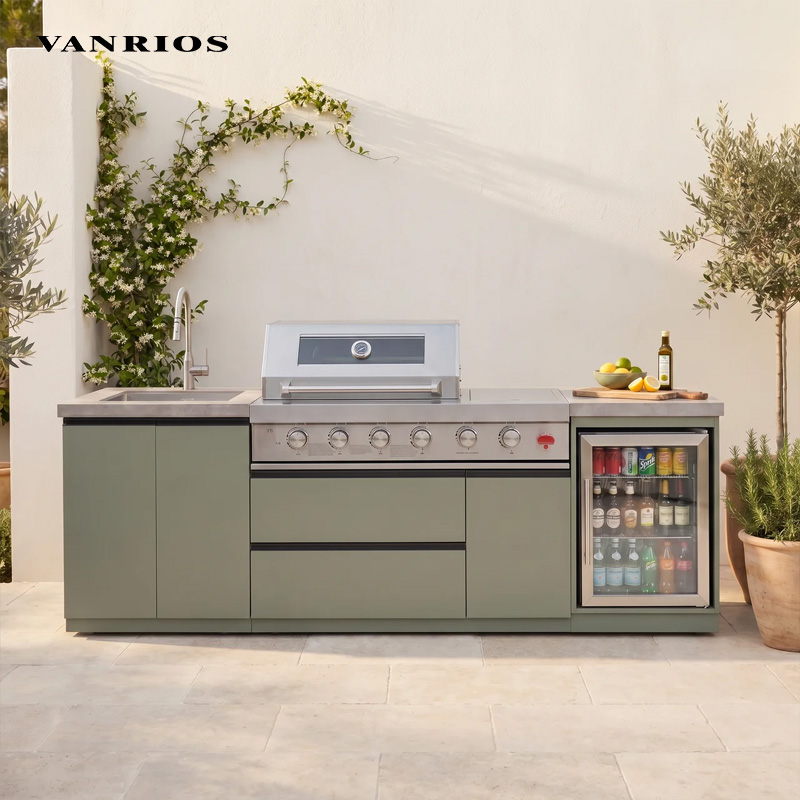
Metal cabinetry dominates modern exterior design. It offers clean lines and robust performance. However, not all metals handle outdoor environments equally. The debate usually centers on stainless steel versus aluminum. Each metal exhibits distinct metallurgical behaviors under stress.
Stainless steel relies on chromium to prevent rust. The standard 304-grade stainless steel performs adequately in mild, dry climates. However, it fails quickly in harsh environments. Coastal air contains airborne salt. Poolside environments contain chlorine. These chlorides attack the protective chromium layer. The steel develops surface rust known as "tea staining." Upgrading to 316 marine-grade stainless steel improves resistance. Yet, marine-grade steel still requires regular polishing to maintain its integrity.
Aluminum operates differently. When raw aluminum touches oxygen, it instantly forms aluminum oxide. This microscopic layer acts as a permanent shield. It prevents further oxidation. Aluminum simply cannot rust. It remains structurally sound even in aggressive saltwater climates.
Bare metal surfaces demand constant attention. Stainless steel highlights every fingerprint, smudge, and water spot. Direct sunlight hitting bare steel creates blinding reflections. Over time, high heat from grills causes the steel to discolor permanently.
Architectural-grade aluminum avoids these issues entirely. Manufacturers apply thick powder-coated finishes to the metal. They bake this finish onto the surface. Powder coating creates a matte, highly durable exterior. It requires virtually zero maintenance. The finish mimics wood grain, concrete, or solid colors flawlessly. You never have to polish or buff a powder-coated cabinet.
Heavy materials complicate site logistics. Stainless steel possesses high density. Moving steel cabinets requires significant labor. Elevating them onto wooden decks requires structural reinforcement. Aluminum offers a massive logistical advantage. It weighs approximately 30% as much as stainless steel. This low weight-to-strength ratio eases transportation. Two people can easily maneuver large modular units. You can safely install aluminum frameworks on second-story balconies without exceeding weight limits.
Material Comparison Chart: Metal Substrates | |||
Material Type | Rust Resistance | Maintenance Level | Weight Profile |
|---|---|---|---|
304 Stainless Steel | Low (Prone to tea staining) | High (Requires constant polishing) | Heavy |
316 Stainless Steel | Medium (Resists salt better) | Medium (Requires frequent wiping) | Heavy |
Powder-Coated Aluminum | Excellent (Physically cannot rust) | Very Low (Soap and water only) | Lightweight |
High-density polyethylene (HDPE) recently entered the exterior cabinetry market. HDPE is a highly durable plastic. It offers complete waterproof capabilities. While polymers solve the moisture problem, they introduce severe thermal vulnerabilities.
Plastics react dramatically to temperature shifts. HDPE possesses a high coefficient of thermal expansion. The material swells when heated by direct sunlight. It contracts sharply during cold winter nights. This constant movement warps doors. It misaligns cabinet hinges. Long continuous spans of polymer will bow under extreme UV exposure. Aluminum maintains rigid structural integrity. It ignores ambient temperature fluctuations. Metal doors remain perfectly aligned year-round.
Grills produce intense radiant heat. Integrating them safely requires specific material properties. HDPE is highly combustible. It will melt or catch fire if exposed directly to intense temperatures. Building codes mandate physical separation. You must install heavy, insulated metal grill jackets. These jackets wrap the appliance. They prevent the plastic from catching fire. This requirement adds significant complexity to your build.
Aluminum is inherently non-combustible. High-output gas grills can safely drop directly into the metal framework. You do not need secondary heat shields. This simplifies appliance integration immensely.
Always verify appliance clearance requirements directly in the manufacturer's manual.
Place refrigeration units far away from high-heat gas grills.
Utilize non-combustible aluminum frameworks to maximize layout flexibility.
Mounting plastic cabinets directly against a pizza oven.
Ignoring local fire codes regarding combustible framing materials.
Assuming waterproof materials are also heat-proof.
Sustainability matters in modern construction. Heating plastics can release chemical compounds into the air. This off-gassing occurs when HDPE faces sustained high temperatures. Additionally, downcycling degraded plastic is difficult. Aluminum serves as a highly sustainable alternative. It does not off-gas under heat. You can recycle aluminum infinitely without losing material quality.
Traditional backyard builds rely heavily on masonry blocks and timber. Contractors have used these methods for decades. However, modern modular engineering highlights severe inefficiencies in traditional techniques.
Custom stone and brick projects are notoriously slow. The process requires extensive site preparation. Contractors must dig deep trenches. They pour thick concrete footings. They wait days for the concrete to cure. Next, they build wooden or steel framing. They apply waterproof membranes. Finally, they attach heavy stone veneers. Weather delays halt progress frequently. Your backyard becomes a chaotic construction zone for weeks.
Modular systems eliminate site chaos. Factory-built cabinets arrive fully finished. Installers simply unbox the units. They level the cabinets using adjustable legs. They bolt the segments together securely. A complete installation typically finishes in one or two days. You reclaim your outdoor space almost immediately.
Natural materials invite natural threats. Termites aggressively seek out wooden frameworks. Carpenter ants burrow into damp timber. Once pests breach the structure, the frame compromises quickly. Stone builds face different enemies. Mortar joints remain highly porous. They absorb ambient humidity constantly. Moss and mold grow in shaded areas. You must power-wash and reseal the stone annually.
Metal frameworks ignore pests completely. Insects cannot eat metal. Mold cannot root into powder-coated surfaces. The structure remains perfectly sterile and intact indefinitely.
Storage space dictates usability. When organizing tools and accessories, interior volume matters. Masonry islands utilize thick cinder blocks. A standard block wall consumes six to eight inches of interior space per side. This dramatically reduces your available storage volume. The island looks massive outside but feels cramped inside.
Metal cabinetry maximizes every inch. The walls measure only a fraction of an inch thick. This design provides 100% usable interior storage space. You can easily fit large propane tanks, trash pull-outs, and oversized grill tools. Upgrading to robust Outdoor Kitchens ensures you utilize your square footage efficiently.
Selecting the best foundation involves looking past initial aesthetics. You must evaluate the long-term demands of your specific property. Smart planning minimizes future labor and maximizes usability.
Evaluate materials based on their long-term value. Wood and basic cinder blocks seem appealing initially. However, they demand continuous attention. You will spend countless weekends sanding, staining, or resealing. Labor intensive installations also drain your time during the initial build phase. Aluminum systems streamline the process. The modular design reduces onsite labor drastically. Furthermore, the material requires zero ongoing maintenance. You clean it with simple soap and water. You spend your weekends cooking instead of repairing.
Your geographic location dictates material suitability. Do not ignore your local climate.
Coastal Regions: Salt air destroys steel. Choose powder-coated aluminum to prevent catastrophic rusting.
High-Humidity Zones: Swamps and southern climates encourage rot. Avoid wood entirely. Metal frameworks prevent mold colonization.
Urban Rooftops: Structural weight limits apply to elevated decks. Heavy masonry is often prohibited. Lightweight metal cabinets meet strict building codes easily.
Heritage Properties: If matching a specific legacy architectural stone is your primary goal, masonry remains necessary. You can apply matching veneer directly to the block.
Warranties reveal a manufacturer's confidence in their product. Always read the fine print. Inferior products offer one-year or three-year limited policies. High-quality systems stand behind their engineering. Look for brands offering limited lifetime warranties on the aluminum structure itself. Additionally, seek out multi-year warranties on the powder-coated finish. This ensures the factory finish will not peel or blister under normal use.
Building a resilient backyard culinary space requires strategic material selection. Traditional materials often hide ongoing maintenance demands and structural vulnerabilities behind beautiful veneers. Wood rots, standard steel rusts, and polymers warp under heavy heat. Powder-coated aluminum provides a predictable, non-combustible, and exceptionally durable alternative. It resists intense coastal weather while eliminating tedious upkeep.
To move forward confidently, finalize your layout parameters. Measure your available footprint carefully. Confirm your exact appliance list immediately, as these dimensions dictate your cabinetry cutouts. Finally, request material finish samples from manufacturers. Test these samples outside against your home's exterior palette in natural sunlight. Taking these precise steps ensures your project remains structurally sound and visually stunning for decades.
A: Aluminum conducts heat, but high-quality powder coating significantly reduces surface temperature and glare. Bare stainless steel reflects intense sunlight and becomes painfully hot to the touch. The matte finish on powder-coated metal dissipates heat much more effectively, remaining comfortable in direct sunlight.
A: While highly durable, extreme blunt force can dent aluminum. However, architectural-grade, thick-gauge aluminum is explicitly engineered to withstand standard backyard impacts. It easily handles errant baseballs, minor tool drops, and typical patio foot traffic without structural compromise.
A: No. Because aluminum is non-combustible, most grill manufacturers allow for direct installation. This eliminates the need for secondary thermal shields or insulated jackets. Always verify compatibility guidelines inside specific grill manufacturer manuals before finalizing your installation layout.
A: You only need mild soap and water. Gently wipe the surfaces using a soft microfiber cloth. Avoid abrasive chemical cleaners, stiff brushes, or high-pressure power washing. Harsh cleaning methods can slowly degrade the protective powder-coat finish over time.


